
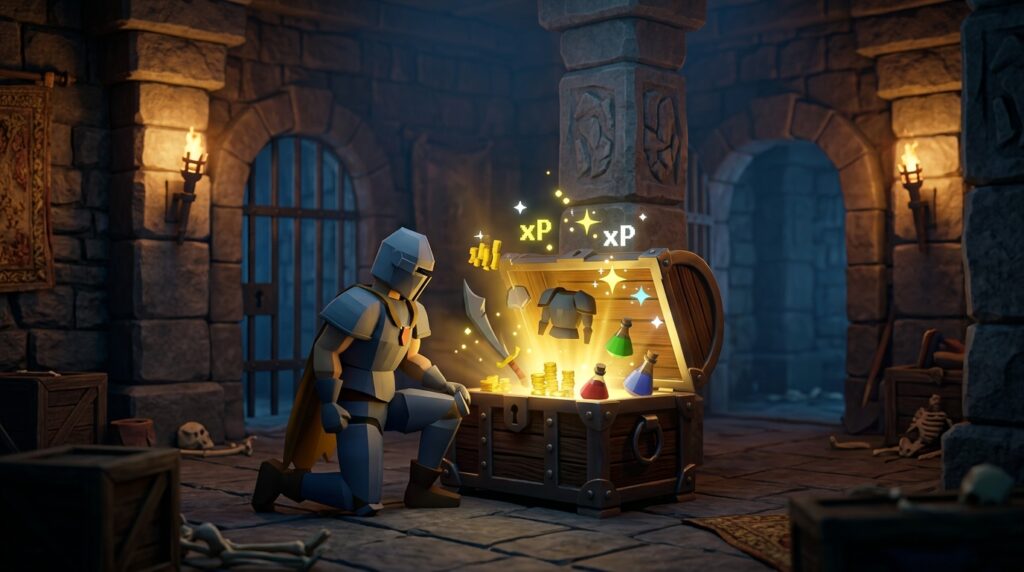
The question “Are OSRS quest rewards worth it?” has a clear answer: usually, yes. Quests such as Waterfall Quest provide a large amount of early combat XP, while Dragon Slayer I unlocks the ability to wear a rune platebody. The real value often comes from the training time and useful gear you can avoid earning separately.
Questing also opens important parts of Old School RuneScape, including Ancient Magicks from Desert Treasure I, Morytania from Priest in Peril, and Barrows gloves from Recipe for Disaster. Whether you are new, returning, or playing an Ironman, the right quests can move your account forward faster than training skills alone. Established players may skip quests with minor rewards, but major progression quests are still well worth your time.
Key Takeaways
- OSRS quest rewards are usually worth prioritizing because they combine large experience drops with permanent upgrades that save substantial training time.
- Focus first on milestone quests such as Recipe for Disaster for Barrows gloves, Desert Treasure I for Ancient Magicks, and Dragon Slayer II for Vorkath and the Ava’s assembler.
- Choose quests based on your account goals: new and returning players benefit from fast experience and early unlocks, while Ironmen gain exceptional value from permanent gear, supplies, transportation, and content access.
- Plan quest order around skill requirements, prerequisites, quest points, achievement diaries, and future unlocks so each quest advances multiple progression goals at once.
Introduction To OSRS Quest Rewards
OSRS quest rewards are often worth far more than the gold shown on the reward screen. A single quest can provide a large experience drop that saves hours of training while unlocking better training methods, cities, spells, gear, and bosses. For example, Desert Treasure I unlocks Ancient Magicks, while Recipe for Disaster gives you access to Barrows gloves after you complete its requirements. These permanent upgrades continue to help your account long after you finish each quest.
The best quests to prioritize depend on your account, but the main question is whether the time and requirements lead to useful progress. New and returning players can use quest experience to build early combat and skill levels quickly. Ironman accounts gain even more value from equipment and supplies they cannot simply buy from other players. Established main accounts may skip quests with small rewards, but major milestones such as Dragon Slayer II remain highly valuable because they unlock Vorkath, the Myths’ Guild, and other long-term benefits. Before starting a quest, check its skill, item, and prerequisite requirements to decide whether the reward supports your current goals.
Quest points also matter because they track your overall progress and contribute toward the quest point cape. Several quest point milestones provide useful rewards along the way. Instead of judging a quest only by its coin reward, consider whether its experience, gear, access, and permanent unlocks will save you time later. This makes quest planning an important part of OSRS progression, whether you are building your first account, returning after a break, improving a main, or developing an Ironman. In most cases, the biggest quest rewards are worth prioritizing because they continue to benefit your account.
Quest XP Rewards Worth Prioritizing

Large quest XP rewards can save you hours of repetitive training, making them some of the most valuable OSRS quest rewards for a new or returning account. Waterfall Quest is a top early priority because its 13,750 Attack and 13,750 Strength experience can take you from level 1 to around level 30 in both skills without combat training. The Knight’s Sword is just as useful for Smithing, granting 12,725 experience and taking you from level 1 to 29 with little effort. For Prayer, quests such as The Restless Ghost, Priest in Peril, and Holy Grail provide useful experience while opening important areas and progression paths.
As your account develops, prioritize quests that combine large experience drops with strong unlocks. Monkey Madness I provides valuable combat experience and unlocks the ability to use the dragon scimitar, one of the best early melee weapons. Quests such as The Grand Tree and Regicide also provide helpful Agility experience, while Druidic Ritual unlocks Herblore. Later Herblore quests can help you reach important potion-making levels faster. These rewards are especially useful on Ironman accounts, where every saved training hour and unlocked resource matters.
The biggest long-term gains often come from quests whose rewards expand what your account can do. Recipe for Disaster leads to Barrows gloves, Desert Treasure I unlocks Ancient Magicks, and Dragon Slayer II opens powerful content, gear options, and access to Vorkath. Even when experience is not the main reward, these quests can remove major progression barriers and make future training more efficient. Check each quest’s skill requirements before starting, then work toward the experience rewards and unlocks that support your planned combat style or account goals.
Barrows Gloves And Combat Unlocks
Recipe for Disaster is one of the best long-term quest goals in Old School RuneScape because it rewards you with Barrows gloves. These gloves offer excellent all-around attack and defensive bonuses, making them useful for melee, ranged, and magic before you move into higher-level gear. You also complete several smaller quests on the way to earning them, so the experience, quest points, and area unlocks add value along the way. For most developing accounts, Barrows gloves remain useful for Slayer, bossing, and everyday combat for a long time.
Several major quests make combat progression easier beyond the gloves themselves. Dragon Slayer I lets you wear rune platebodies and green d’hide bodies, while Monkey Madness II unlocks powerful experience-training methods and access to Demonic Gorillas. A Kingdom Divided gives you access to useful Arceuus spellbook options, including undead thralls, which can improve your damage during many player-versus-monster encounters. These rewards can save training time and open content that would otherwise remain unavailable.
Questing also sets up bigger goals such as Desert Treasure I for Ancient Magicks and Dragon Slayer II for Vorkath, the Ava’s assembler, and other valuable upgrades. The immediate quest reward may be a modest amount of experience, but the unlocked gear, spells, training methods, and bosses continue to help your account long after completion. If you are choosing which quests to prioritize, start with Recipe for Disaster and then work toward the requirements for Monkey Madness II, A Kingdom Divided, and later Dragon Slayer II. These quests are some of the clearest examples of OSRS quest rewards being worth the time.
Ancient Magicks And Dragon Slayer II

Ancient Magicks from Desert Treasure I are among the most valuable quest rewards in OSRS. Ice Barrage and Ice Burst let you freeze and damage groups of enemies, making tasks such as dust devils and smoke devils faster and more profitable. The spellbook also provides useful teleports, while Blood spells can restore your health and reduce food use during combat. Desert Treasure I has demanding requirements and several challenging bosses, but access to burst training, efficient Slayer methods, and powerful player-versus-monster tools makes it a strong account priority.
Dragon Slayer II offers an equally important long-term upgrade by unlocking Vorkath, one of the best repeatable player-versus-monster money-makers for many accounts. Completing the quest also lets you use dragon platebodies and dragon kiteshields, access Lithkren, and create Ava’s assembler after obtaining a Vorkath head. Vorkath can provide valuable drops such as dragon bolts, dragon bones, blue dragonhide, and the skeletal visage. The quest’s large experience rewards also help strengthen several skills. Although the requirements and final battles are difficult, access to reliable profit, useful dragon equipment, and future player-versus-monster progression makes Dragon Slayer II well worth prioritizing.
Quest Rewards For Different Accounts
For a new account, quest rewards are usually worth prioritizing because they replace many hours of early training. Quests such as Waterfall Quest, Fight Arena, and The Grand Tree provide useful experience, while quests such as Biohazard and Priest in Peril open new shops, banks, and training areas. Transportation unlocks, including fairy rings, spirit trees, and the Ardougne teleport, make nearly every future activity faster. You should also work toward Recipe for Disaster because Barrows gloves are one of the best long-term goals for a growing account. Completing quests early can also unlock achievement diaries and satisfy requirements for later progression, which helps you avoid backtracking.
Established mains can be more selective, but the biggest quest rewards remain highly valuable. Desert Treasure I unlocks Ancient Magicks, while Dragon Slayer II grants access to Vorkath, the Myths’ Guild, and other powerful account upgrades. Both quests remain worthwhile even when you already have strong gear. Quests can also unlock Slayer monsters, bosses, training areas, spellbooks, and permanent city access that cannot be replaced by simply earning more money. Before choosing your next quest, check whether it leads to a useful achievement diary reward or appears as a requirement for a major future quest. Shorter quests with small rewards may be optional, but major unlock quests can improve your account for hundreds of hours.
Ironman accounts usually gain even more value from questing because experience, equipment access, and utility unlocks are harder to obtain through other methods. Early quests can provide fast combat levels and access to locations such as Fossil Island, while Recipe for Disaster, Lunar Diplomacy, and Song of the Elves open important gear, spell, and training options. Permanent transportation is especially useful when you cannot buy every convenience from the Grand Exchange. Quest-locked Slayer monsters and bosses can also become essential sources of supplies and upgrades. Plan around future requirements, including skill levels, quest points, and achievement diaries, so each quest moves your account toward several goals at once. For most Ironman players, the answer to whether OSRS quest rewards are worth it is yes, particularly when a quest unlocks content you will use repeatedly.
Conclusion On OSRS Quest Rewards
OSRS quest rewards are generally worth the effort because they combine large experience drops with permanent account upgrades. Instead of spending hours training one skill, you can gain useful XP from quests such as Waterfall Quest, The Knight’s Sword, and Monkey Madness I while unlocking new areas and equipment. These rewards remain valuable long after you finish each quest, making them especially helpful for new, returning, and Ironman accounts. Even when a quest does not offer much cash, its experience and account access can speed up many future goals.
Prioritize quests that unlock powerful progression milestones, including Recipe for Disaster for Barrows gloves, Desert Treasure I for Ancient Magicks, and Dragon Slayer II for access to Vorkath and the Myths’ Guild. You should also consider quests that unlock useful transportation, such as those leading to fairy rings, spirit trees, and other fast travel options. These features save time across hundreds of future trips. Major combat quests like Monkey Madness II and Song of the Elves also open strong training methods, gear, and activities. These rewards can improve your combat, travel, and money-making options far more than a short-term quest payout.
Once you have completed the highest-value quests for your account, you can handle quests with modest rewards or stories focused mainly on lore at your own pace. They may still provide quest points, skill experience, and access to later content, but they usually do not transform your account as quickly as Barrows gloves, Ancient Magicks, Dragon Slayer II, or major transportation unlocks. Plan your quest order around the upgrades you need next, and use quest XP rewards to skip some of the slowest early training. For most OSRS players, questing is one of the fastest ways to build a stronger account.
Why OSRS Quest Rewards Are Worth It
Quest rewards are usually worth prioritizing in Old School RuneScape because their lasting benefits go far beyond gold. Recipe for Disaster leads to Barrows gloves, while Desert Treasure I unlocks Ancient Magicks and Dragon Slayer II gives you access to Vorkath, the Ava’s assembler, and other useful upgrades. Many quests also provide large experience rewards, helping you skip hours of training in skills such as Agility, Herblore, and combat. Even when a quest has no valuable item, its requirements may open new areas, bosses, spells, or training methods that improve your account over time.
Your best approach is to plan quests around your current goals, whether you are building a main account, progressing an Ironman, or returning after a break. Start with major unlocks such as Recipe for Disaster, Desert Treasure I, and Dragon Slayer II, then complete shorter quests that offer useful experience or required quest points. Avoid rushing through every quest for a small reward, but remember that key unlocks often save more time than early money-making methods. If you are considering faster account progression, learn more about the hidden dangers of using OSRS boosting services and make sure your quest progress stays safe and within the game’s rules.