
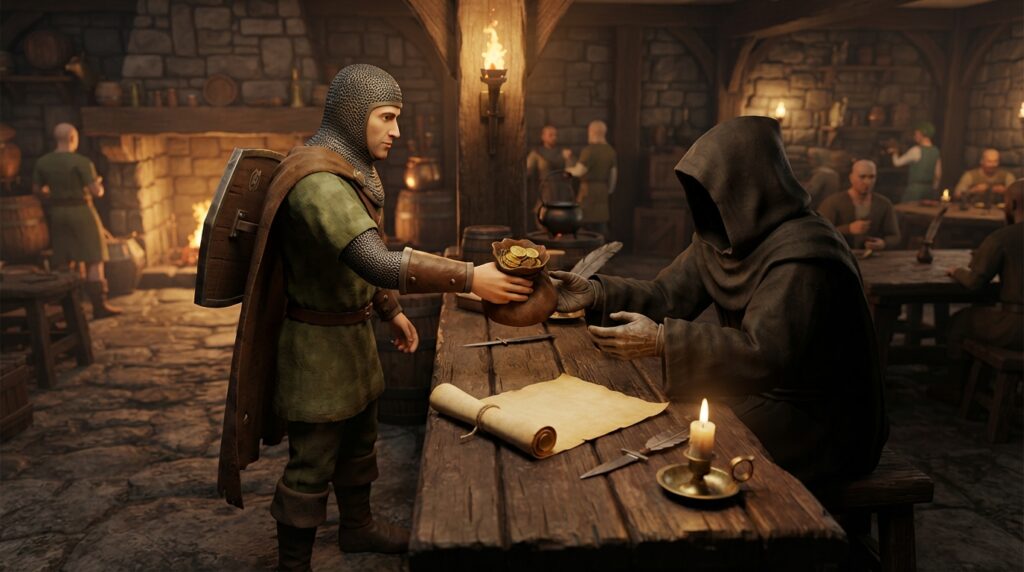
OSRS questing services can cost cents for a simple quest or around $15 for a demanding quest such as Desert Treasure II. Listing examples include Cook’s Assistant at $0.10 and Desert Treasure II at $12.58 to $15. These examples do not represent a market-wide average, and larger orders may be priced differently. A Quest Cape bundle, for instance, is listed at $600, so a package can cost far more than a single quest.
Before comparing prices, check what each quote includes, such as supplies or gathering quest items. Also consider how much time you would spend playing yourself. Account policy matters too: Jagex treats paying someone to play your OSRS account as conduct covered by its Real World Trading rule and prohibits account sharing or lending. Weigh that risk alongside the cost.
Key Takeaways
- OSRS quest-service listings range from $0.10 for Cook’s Assistant to $12.58–$15 for Desert Treasure II, but those examples are not a market-wide average or a guaranteed quote.
- Compare the total cost for the same OSRS quests and account needs, including supplies, quest-item gathering, and extra preparation; a Quest Cape bundle listed at $600 covers a much broader goal than one quest.
- Weigh the price against your own play time: estimated first-time quest durations range from 10–20 minutes for novice quests to 2–5+ hours for grandmaster quests such as Desert Treasure II.
- Treat paid OSRS questing as an account-policy risk because Jagex’s rules cover paying someone to play your account and prohibit account sharing or lending, with possible mutes or bans.
What Does OSRS Questing Usually Cost?
OSRS questing listings range from cents for a simple quest to several dollars or around $15 for a difficult one. The prices below are listing examples, not an independent market-wide average, and a larger order may receive a different quote.
Cook’s Assistant, a simple Old School RuneScape quest, is listed at $0.10 in the reviewed examples. Some listings advertise OSRS quest services from $0.40, which is a starting price, not the price for every quest. Check the price for the specific quest you want instead of treating a starting figure as a standard rate.
For longer or more demanding quests, the reviewed prices include Desert Treasure II at $12.58, $14.00, and $15.00. Dragon Slayer II appears at $8.50 and $10.00, while Song of the Elves appears at $8.84 and $12.00. These differences show why it helps to compare the price for the specific quest you want, not just the headline starting price.
Those figures do not guarantee that every listing covers the same work. One quote may include supplies or gathering quest items, while another may charge for them separately. Check what each quote includes before comparing totals, and remember that a quote for several quests may be calculated differently from individual listed prices.
Which Quests Cost More?
Quest difficulty usually affects the quote. Cook’s Assistant is listed at $0.10, while grandmaster quests such as Desert Treasure II are listed at $12.58 to $15.00. A short novice quest takes less time than a demanding quest with many steps, prerequisites, or difficult encounters, so the two are unlikely to cost the same.
Reviewed prices for Dragon Slayer II range from $8.50 to $10.00, while Song of the Elves ranges from $8.84 to $12.00. Desert Treasure II costs more in the reviewed listings, at $12.58 to $15.00. Differences between quotes can reflect how much work a quest involves and what each quote includes.
Published estimates put first-time novice quests at 10 to 20 minutes, master quests at 1 to 3 hours, and grandmaster quests at 2 to 5+ hours. These are estimated quest durations, not delivery guarantees. The time needed can vary depending on your account’s progress and whether you already meet a quest’s requirements.
If your account lacks the required progress, you may need more preparation before a quest can be completed. That can make the work different from the estimate for an account that is ready. A grandmaster quest such as Desert Treasure II can therefore take much longer than a short quest like Cook’s Assistant, helping explain the wide gap between their listed prices.
What Can Change Your Quote?
Your OSRS questing quote can change based on your account type, play method, supplies, or whether gathering quest items is included. One published pricing example adds 30% for Hardcore Ironman orders and 50% for Parsec, a remote-play method. The same example adds 15% if you lack stamina potions and 20% for quest-item gathering. A quote may also depend on whether your account is ready for the quest. Missing prerequisites or account progress can mean extra preparation before the quest begins. Ask whether that preparation is included, especially if your account does not yet meet the quest’s requirements. Before comparing options, check whether each quote includes:
- Supplies such as stamina potions
- Gathering the quest items your account needs
- Account-specific requirements, including any extra preparation
The details matter: a low starting price may cover only the quest, while supplies or item gathering may cost extra. For example, a quote that adds the listed 20% quest-item-gathering surcharge covers different work from one that includes gathering in its base price. Add-ons and quote methods vary, so compare the total price for the same quest and included work. Check whether percentages apply to the base price, whether any other extra charges are listed, and what the quote assumes about your account. A starting price alone does not show what you may pay for a complete order.
Are Quest Bundles Better Value?
Quest bundles are not automatically better value. They make sense only when the included work matches what your OSRS account needs. Reviewed listings include $40 for a Desert Treasure bundle, $75 for a Barrows Gloves bundle, and $600 for a Quest Cape bundle. Those totals are much higher than individual quest examples, but the package scope is different: a bundle may cover multiple quests rather than one task.
The package name alone does not tell you exactly what is included. Check the quest list and any account requirements, then compare them with the individual quests you want completed. A Quest Cape package, for example, may cover a much broader goal than finishing one named quest, so its total is not directly comparable to a single-quest quote.
Also check for extra charges that could change the final cost, such as fees for supplies, quest-item gathering, or account type. A package price that excludes work your account needs may not match the cost of a quote that includes it. Compare the full package terms with individual-task quotes for the same quests and requirements. Without that like-for-like comparison, you cannot tell whether a bundle is a bargain.
How Does Cost Compare With Questing Yourself?
A paid OSRS questing service shifts the preparation and completion to another player, while playing yourself avoids the service charge and lets you experience the quest firsthand. The comparison involves the cost, the time you would spend playing, and whether you enjoy the story.
Published estimates for first-time quest durations range from 10 to 20 minutes for novice quests to 1 to 3 hours for master quests and 2 to 5+ hours for grandmaster quests. The estimate depends on the quest and does not promise how long any particular completion will take.
Doing a quest yourself also means learning its requirements, gathering the needed items, and working through its steps. That preparation adds to your play time, especially if your account is missing prerequisites. A cash price lets you compare the paid option with the time commitment, but you do not need to assign a dollar value to your own time.
Dragon Slayer II and Desert Treasure II are grandmaster quests, while Song of the Elves is a master quest. The time trade-off depends on how much you value the unlocks or rewards, the quest story, and the other parts of OSRS you could play instead.
Consider the specific quest, not just its difficulty label. You may want to play through one quest for its story but prefer to skip the preparation for another. Your choice can differ from quest to quest, even when both have long estimated durations.
What Account Risks Should You Weigh?
Weigh account-policy risk alongside the service cost and the time you would spend questing yourself. Jagex defines paying someone to play a RuneScape or Old School RuneScape account for you as conduct covered by its Real World Trading rule, so paying for an OSRS quest carries a policy risk. Jagex’s rules also prohibit sharing, transferring, or lending accounts and warn that another user’s rule-breaking can result in the account being muted or banned. This warning also applies if the person breaking the rules is someone you asked to complete a quest. So the decision involves more than whether a quote for Desert Treasure II or Song of the Elves fits your budget. Consider whether the time saved is worth accepting a policy risk that could affect the account you have built. A lower price does not remove that risk, and no paid questing option guarantees a safe way to complete content. Playing yourself avoids giving another player access to your account, but means taking on the quest and preparation yourself. Include that difference in your comparison: weigh the service cost against your available play time and the possibility of account action under Jagex’s rules.
Compare the Full Quest Quote
For a like-for-like comparison of OSRS listings, identify the exact work involved. A single quest for an unlock is not directly comparable to a bundle covering several quests, so compare listings with the same quest scope.
When comparing available quotes, use the same account details: account type, completed prerequisites, supplies on hand, and whether quest items need gathering. Compare the final totals and note any preparation, supplies, or add-ons included. If an account is not ready for a quest, check whether the listed total includes the extra work needed to meet its requirements.
Compare what each listed total includes. A lower figure is not a fair comparison if it assumes you already have items or supplies that another quote includes. For a broad goal such as a Quest Cape, check the exact quest list covered before comparing the package with separate quests.
Then decide whether the quoted cost is worth the time you would otherwise spend playing. If the account-policy risk makes paid play unacceptable to you, use the comparison to plan to complete the quest yourself.