
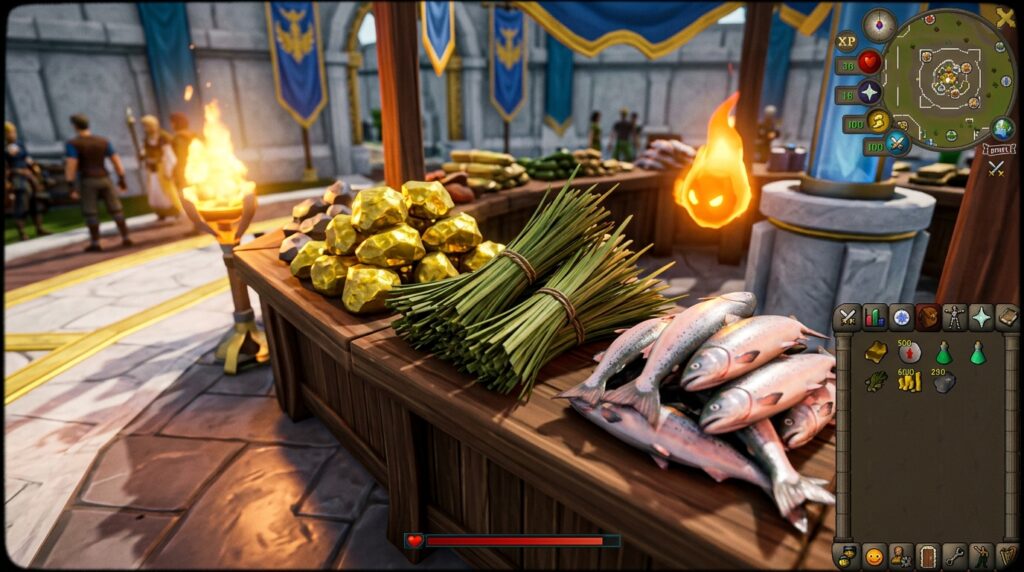
You don’t need a massive bank stack or years of experience to start making millions in the Grand Exchange. By focusing on reliable rs3 beginner merchanting items, you can turn a steady profit while learning how market prices move. Even with the 2% sales tax, flipping everyday essentials allows you to grow your wealth without the stress of risky, high-priced investments.
The secret to success for a new merchant lies in high-volume goods that players use every single day. Items like Fire Runes, Sailfish, and even simple Limestone Bricks are constantly flowing through the market because people need them for training and bossing. Because these items trade so frequently, you can buy and sell them quickly to see immediate returns on your gold.
Key Takeaways
- Focus on high-volume consumables like runes, food, and skilling materials to ensure high liquidity and minimize the risk of getting stuck with unsold stock.
- Calculate the 2% Grand Exchange tax before every trade to ensure your profit margin remains positive, aiming for a price spread of at least 3% to 5%.
- Utilize the ‘instant-buy and instant-sell’ method with a single item to accurately test current market margins before committing to a bulk purchase.
- Leverage 4-hour buy limits and peak player hours to maximize the volume of your trades and capture better price spreads during high-demand periods.
High Volume Consumables For Safe Flipping
When you are first starting your merchanting journey, your biggest goal is to keep your gold stack safe while you learn the ropes. High volume consumables like Fire Runes and Soul Runes are the perfect training ground because they are used by almost every player for combat and skilling. These items trade by the millions every single day, which means you can buy and sell them almost instantly without getting stuck with stock. Since the demand is constant, the price rarely swings wildly, allowing you to practice finding margins with very little risk to your savings.
Focusing on food items like Sailfish or Rocktails is another smart move for a beginner merchant. Players constantly need high tier food for bossing and Slayer tasks, so these items are always flowing through the Grand Exchange. You can easily test the current buy and sell prices by trading a single item, then fill your buy limit to flip the rest for a steady profit. Even with the 2% Grand Exchange tax, the high frequency of these trades helps you build your wealth through many small, successful flips rather than one big gamble.
The beauty of these beginner items is that they teach you how to read market trends without requiring a massive investment. You will start to notice how prices might dip slightly during certain times of the day or week, giving you the perfect opening to buy low. Because items like arrows and runes are essential for gameplay, they will always have a buyer waiting on the other side of your offer. This high liquidity ensures that you can always get your cash back quickly if you need it for a different trade.
Profitable Skilling Materials And Invention Components
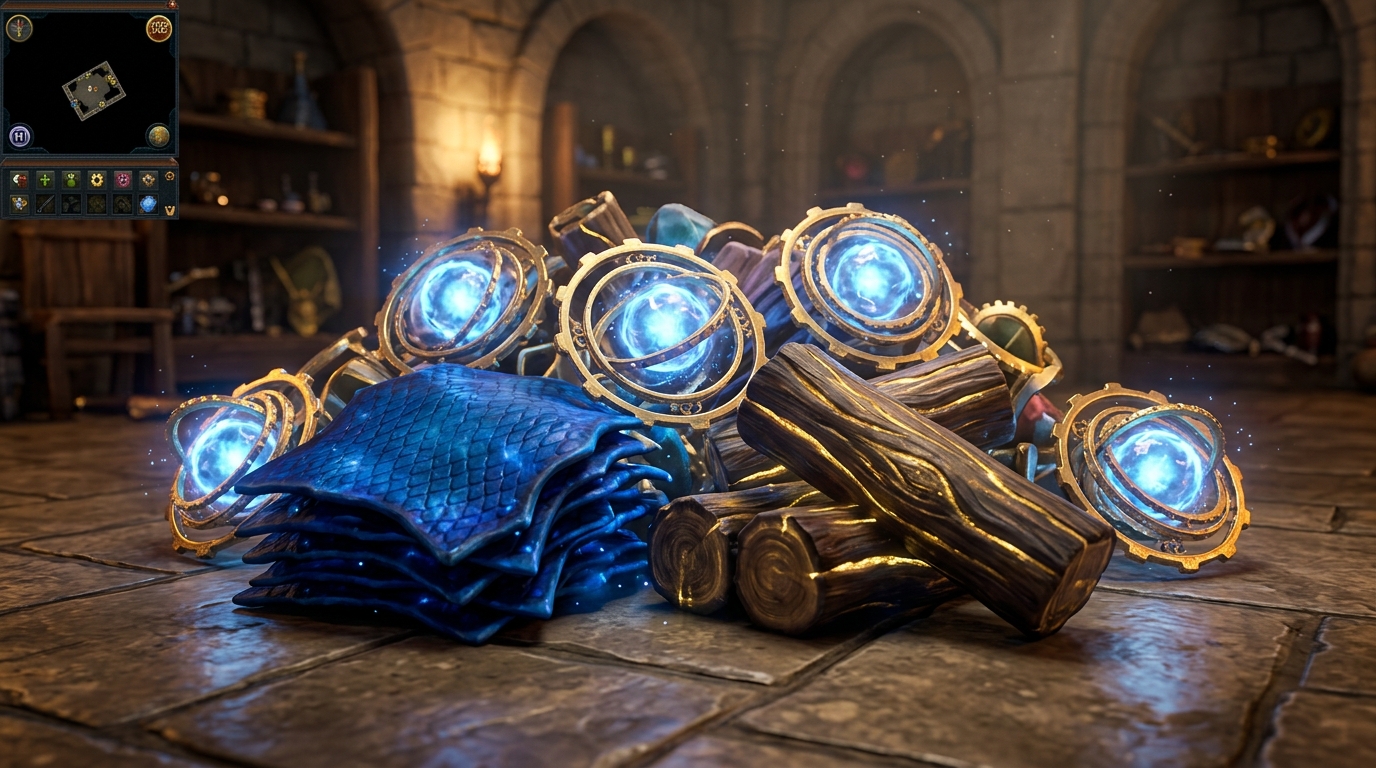
When you are just starting out with merchanting, high-volume skilling materials are your safest bet for consistent profits. Items like White Berries and Limpwurt Roots are perfect because players need them in massive quantities for Herblore training. Since these items are constantly being consumed, they have a high turnover rate on the Grand Exchange. You can easily buy them at a slightly lower price and sell them back to impatient trainers who need them immediately. This strategy allows you to learn how price margins work without risking a large amount of your hard-earned gold.
Focusing on items used for the Invention skill is another fantastic way to grow your small coin stack. Many players buy items like Black Salamanders or various insulated boots in bulk to disassemble them for parts and components. Because these items are frequently removed from the game through disassembly, the demand rarely drops off. You should look for items that provide helpful components like Powerful or Enhancing parts. By monitoring the price gaps on these common goods, you can make a steady profit while helping other players reach their skilling goals.
Incense sticks are a hidden gem for beginner flippers because they offer a variety of utility buffs that players use for every activity. Whether it is Torstol incense for a combat boost or Spirit Weed incense for familiar special attacks, these items are always in high demand. Since you can trade large quantities of these sticks at once, the small profit margins on each individual item quickly add up. Pay attention to how prices move during the week, as many players stock up on these consumables before the weekend. Mastering these simple markets will give you the confidence to eventually move on to more expensive items.
Low Risk Gear Flipping For New Merchants
Starting your merchanting journey in RuneScape 3 is much safer when you focus on mid-tier combat gear that players use every single day. Items like the Bandos Chestplate or Dragon Boots are perfect for beginners because they are incredibly stable and always in high demand for Slayer tasks and entry-level bossing. Since these items have a lower price point than high-end hero items, you do not have to worry about a single bad trade wiping out your entire bank. You can easily test the margins by using the instant-buy and instant-sell method to see the active spread. This strategy lets you earn a consistent profit while you learn how the 2 percent Grand Exchange tax affects your bottom line.
Once you feel comfortable with the basics, you can expand your inventory to include other popular power armor pieces like Subjugation robes or Armadyl equipment. These items are great because they occupy a sweet spot where the profit margins are often wider than high-volume consumables like runes or food. You should keep an eye on the 4-hour buy limits to ensure you are maximizing your potential earnings without overextending your gold coins. Trading these physical gear pieces helps you understand market psychology because you can see how prices react during peak gaming hours. By sticking to these reliable items, you will build the confidence needed to eventually tackle much more expensive flips in the future.
Accounting For The Grand Exchange Tax
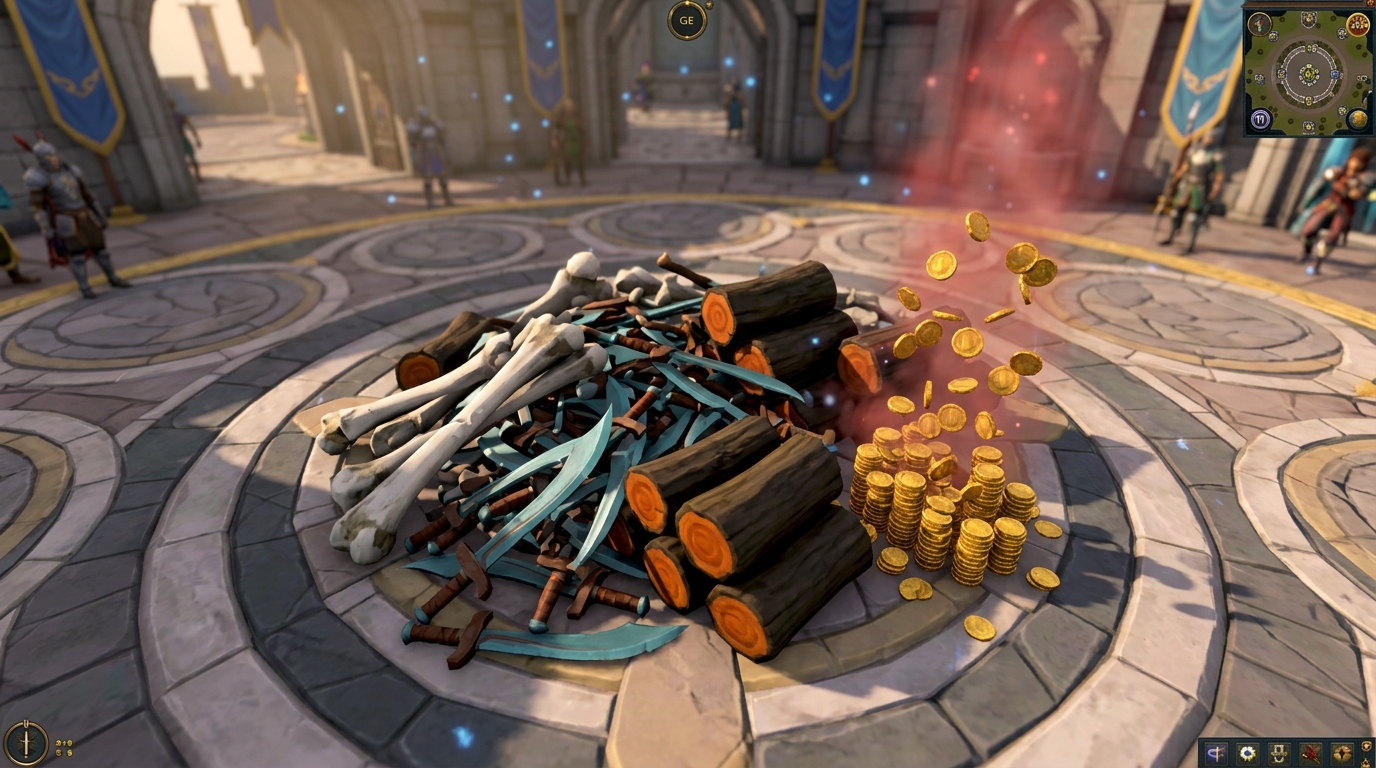
When you start flipping items like Fire Runes or Raw Sailfish, you have to account for the 2% Grand Exchange tax that is deducted from every successful sale. This small fee might seem minor at first, but it can quickly eat your entire profit margin if you are not careful. Since the tax is rounded down, you need to ensure that the gap between your buy price and sell price is large enough to cover this cost while still leaving coins in your pocket. For beginners using low-risk items, a tight spread often means you are trading for very thin margins, making every single gold piece count. Always double check your math before committing to a large stack of items to ensure the tax does not turn a winning trade into a loss.
Choosing the right high volume items is vital because they allow you to test these margins without risking your entire bankroll. Items like Clean Toadflax or Rune Arrows are great for beginners because they trade constantly, but you must find a price spread that is wider than the 2% tax hit. If you buy a batch of Incense Sticks for 1,000 gold each and sell them for 1,010 gold, the 2% tax will take 20 gold per item, resulting in a net loss of 10 gold for every unit sold. You should look for items where the difference between the instant buy and instant sell price is at least 3% to 5% to stay profitable. Mastering this balance is the first real step toward becoming a successful merchant and growing your wealth safely in RuneScape. While flipping is great, you can also explore RS3 Necromancy money making to diversify your income through high-profit rituals and combat.
Best High-Volume Items for New Merchants
Stepping into merchanting is much easier than it looks when you start with high volume items. You should focus your initial efforts on staples like Fire runes, Soul runes, or even simple Arrow shafts because players use these in massive quantities every single day. These items are perfect for beginners because they have high trade limits, allowing you to buy thousands at once without risking your entire gold stack. By learning how the prices of these consumables wiggle by just a few coins, you can start seeing steady returns on your investment. Consistency is your best friend when you are just starting out with a smaller bankroll.
You will find that skilling materials like Clean herbs or Molten glass offer a fantastic way to practice reading market trends. Since players are constantly training skills like Herblore and Crafting, these items move through the Grand Exchange quickly and rarely sit in your inventory for long. You can try buying these during off-peak hours and selling them when the player count is higher to capture a better profit margin. Even after accounting for the two percent Grand Exchange tax, these low-risk items provide a safe environment to grow your wealth. Watching your gold grow through these small trades will give you the confidence to eventually tackle more expensive items.
Taking that first step today is the most important part of your journey toward becoming a wealthy merchant. You do not need a massive amount of gold to begin, as even a few hundred thousand coins can be turned into much more with patience. You can also supplement your income by learning how to make millions every day with RuneScape 3 shop runs. Pick two or three items from the list of consumables or skilling supplies and set your first buy orders right now. As you watch your successful flips add up, you will develop a natural feel for the rhythm of the RuneScape economy. Your future self will thank you for starting this habit today while your stack of coins begins its steady climb upward.
Frequently Asked Questions
1. How much money do I need to start merchanting in RS3?
You can start flipping with as little as 100,000 to 500,000 gold. By focusing on cheap, high-volume items like Fire Runes or Limestone Bricks, you can grow your small stack safely without needing millions up front.
2. How do I find the profit margin for an item?
Buy one single item, like a Sailfish, at a very high price to see the instant-buy cost, then sell it back at a very low price to see the instant-sell cost. The difference between these two numbers, after subtracting the 2% Grand Exchange tax, is your profit margin.
3. Is merchanting risky for new players?
Merchanting is very safe if you stick to consumables that players use every day for training. Items like Soul Runes or Rocktails are always in high demand, so you are unlikely to get stuck with items that you cannot sell.
4. What are the best items for a beginner to flip?
Your best bets are high-volume goods like Fire Runes, Sailfish, and Limestone Bricks. These items trade in massive quantities every hour, which allows you to complete your trades quickly and keep your gold moving.
5. How does the 2% Grand Exchange tax affect my profits?
The tax is automatically taken from your total sale price when an item sells. To stay profitable, you simply need to ensure your sell price is at least 2% higher than what you paid for the item.
6. How many items can I buy at once?
Every item in the Grand Exchange has a buy limit that resets every four hours. For example, you can buy up to 25,000 Fire Runes every four hours, so you should try to hit these limits on multiple items to maximize your hourly earnings.
7. Why should I flip food like Sailfish or Rocktails?
Players constantly eat these items while fighting bosses or training Slayer, meaning they are always leaving the game and need to be replaced. This constant cycle of consumption creates a very stable market for you to buy low and sell high.