

Cerberus is a level 318 Slayer boss with 600 hitpoints, and you need at least 91 Slayer plus a hellhound or Cerberus task before you can enter her lair. This OSRS Cerberus guide shows you how her attacks, prayer switches, and timed specials fit together, so you know what is coming before it hits. Her standard melee, ranged, and magic attacks each max out at 23 damage, and she attacks on a six game tick cycle, or 3.6 seconds per attack. She opens with a triple attack and repeats it every 10 attacks, which gives you a simple pattern to count.
Once she drops below 400 hitpoints, she starts summoning souls every seventh attack. Below 200 hitpoints, she begins launching lava pools every fifth attack. Those two timers can land on the same attack, so you need to plan your prayers early. Along the way, you will see how accessible melee weapons like Arclight compare with high-end options, and how the Ward of Arceuus and a spectral spirit shield can cut your prayer drain.
Key Takeaways
- You need at least 91 Slayer and a hellhound or Cerberus Slayer task from a Slayer master such as Duradel before you can enter Cerberus’s lair.
- Cerberus opens with a triple attack that uses magic, ranged, and melee in that order, and the triple repeats every 10 attacks, so you should switch your prayers in the order magic, ranged, then melee.
- Once Cerberus drops below 400 hitpoints, she summons three souls every seventh attack, and once she drops below 200 hitpoints, she launches lava pools every fifth attack, so you should plan prayers early for attack 35, where both timers land together.
- Spectral spirit shields and Ward of Arceuus reduce the Prayer drain from Cerberus’s souls, and using both together cuts the drain to 10 Prayer points per soul.
How Do You Get Into Cerberus’s Lair?
You need a hellhound or Cerberus Slayer task and at least 91 Slayer to enter the fight. Cerberus is a level 318 boss with 600 hitpoints, and her lair is where you go to face her.
The task is the key. Ask a Slayer master such as Duradel for a hellhound or Cerberus assignment, and that task is what lets you take on the boss. Without one, you can’t start the fight, no matter how strong your gear is. Check your task before you pack your bag, so you don’t spend an hour preparing for a fight you can’t join.
If you want a faster route to a hellhound task, a wild pie can boost one. The pie helps you get a hellhound assignment, but it does nothing to lower the Slayer requirement. You still need at least 91 Slayer to fight her, so a boosted task only helps if your level is already there.
Keep an eye on your Slayer level as you prepare. Many players reach the requirement, then forget to check it after spending their stats on other training. Look at your Skills tab before you head out, and make sure you still meet the 91 mark.
Plan your trip around your task. Gather your supplies, confirm your Slayer level, and then head to Cerberus’ Lair. Once you’re inside, the attack patterns and prayer timing covered earlier will matter most.
What Are Cerberus’s Attacks and Attack Cycle?
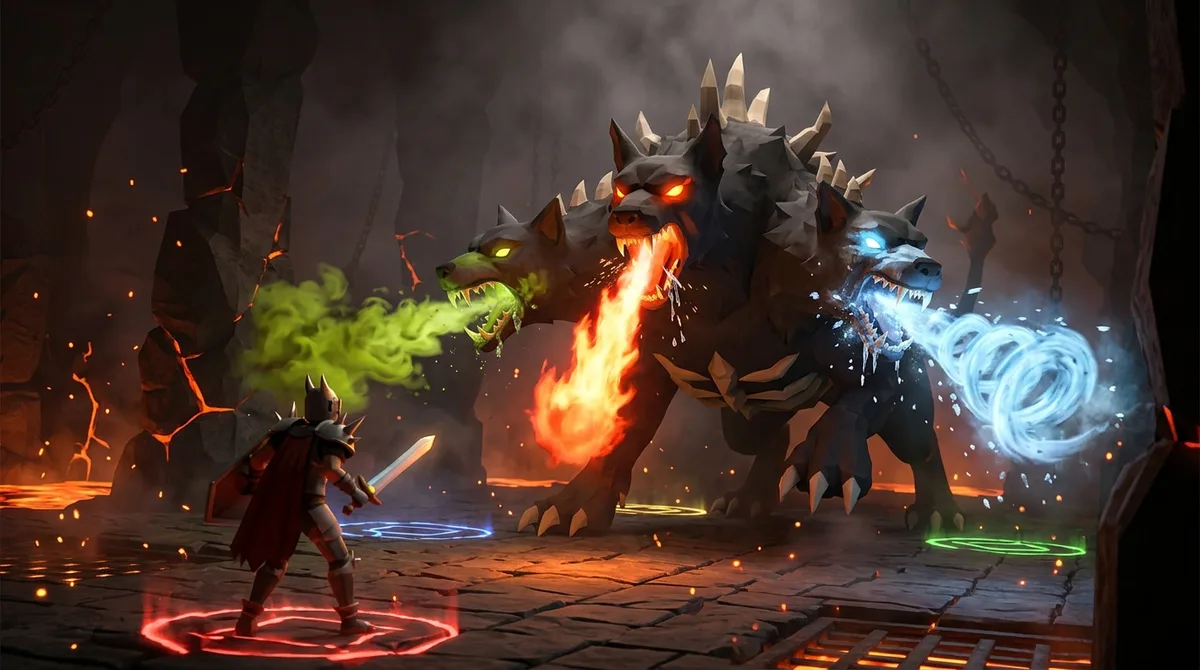
Cerberus’s regular attacks are melee, ranged, and magic hits that each max out at 23 damage. She attacks once every six game ticks, or 3.6 seconds, in a repeating pattern that starts with a triple attack. Learning that pattern is the easiest way to stay ahead of her, because her hits follow a schedule you can count.
Her first attack is always the triple attack, and it uses magic, ranged, and melee in that order. That order is what you plan around. Your protection prayer needs to match the hit that is landing, so switch in the same sequence: magic first, then ranged, then melee. If you wait to see which hit is coming, you will often be a step behind.
The triple attack comes back after every 10 attacks. If you count the first triple as attack 1, the next one lands on attack 11, then attack 21, attack 31, and so on. Each of those moments brings three different hit types in a row, so they deserve your most careful prayer switching.
Between triples, the count tells you when the next big change is due, so you are never left guessing. It matters even more once Cerberus drops low enough to start her timed specials. Below 400 hitpoints, she summons souls every seventh attack, and below 200 hitpoints, she launches lava pools every fifth attack. The number 35 is the first attack that is a multiple of both 5 and 7, so that is where both timers can land on the same attack.
Keeping count doesn’t need any special tools. Write it on a sticky note by your monitor, or track it in your head if you’re comfortable doing so. Use this routine every time you enter the lair:
- Start your count on the first attack Cerberus makes, and call that attack 1.
- Switch your prayers in the order magic, ranged, and melee as the triple attack lands.
- Keep counting after the triple, and note that the next triple is due on attack 11.
- Once she drops below 400 hitpoints, mark every seventh attack as a soul attack.
- Once she drops below 200 hitpoints, mark every fifth attack as a lava attack, and plan extra prayer and movement for attacks where the two marks overlap.
How Do Summoned Souls and Lava Pools Work?
Summoned souls and lava pools are two timed attacks that start once Cerberus drops low, and each one runs on its own counter. Below 400 hitpoints, she summons three souls every seventh attack. An unprotected soul deals 30 damage to you, but a soul you block correctly drains 30 Prayer points instead.
That drain adds up fast. Three souls landing on the same attack can pull a large chunk of your Prayer points in one go, so keep an eye on your prayer bar, not just your hitpoints. Your Prayer level and the points you have left decide how long you can keep blocking.
You can cut that drain with two items. A spectral spirit shield reduces the drain to 15 Prayer points per soul, and Ward of Arceuus reduces it to 20. If you use both together, each soul drains only 10 Prayer points. Stacking them is a strong choice for longer fights, especially when you’re also watching for lava.
Below 200 hitpoints, the lava pools begin, and they come every fifth attack. Cerberus places one pool directly on your tile and two more at random locations. Before 25 June 2025, the pools hurt you if you stood anywhere in a 3-by-3 area around a pool. That changed on that date, so now the pools only damage you when you stand on a pool tile.
That update changes how you move. You no longer need to leave the whole area around a pool, only the square the pool is sitting on. When the lava attack is coming, step off your own tile, and you can safely stand next to a pool that lands nearby. Check where the two random pools appear before you decide where to step, because the spot you pick should be clear of all three.
The same June 2025 update also changed Ward of Arceuus. It reduces the Prayer drain from Cerberus’s summoned souls by 33 percent, which makes the item more useful once souls start appearing. If you plan to use Ward, factor that lower drain into how many Prayer points you bring.
When a soul attack and a lava attack land on the same attack, you have two jobs at once. Your prayers need to block the soul, and your feet need to be on a safe square to dodge the lava. Practice this in your head before the fight. Decide where you’ll step if a pool lands on your tile, and make sure your Prayer points can cover a few blocked souls without running dry.
Which Gear Works Best Against Cerberus?
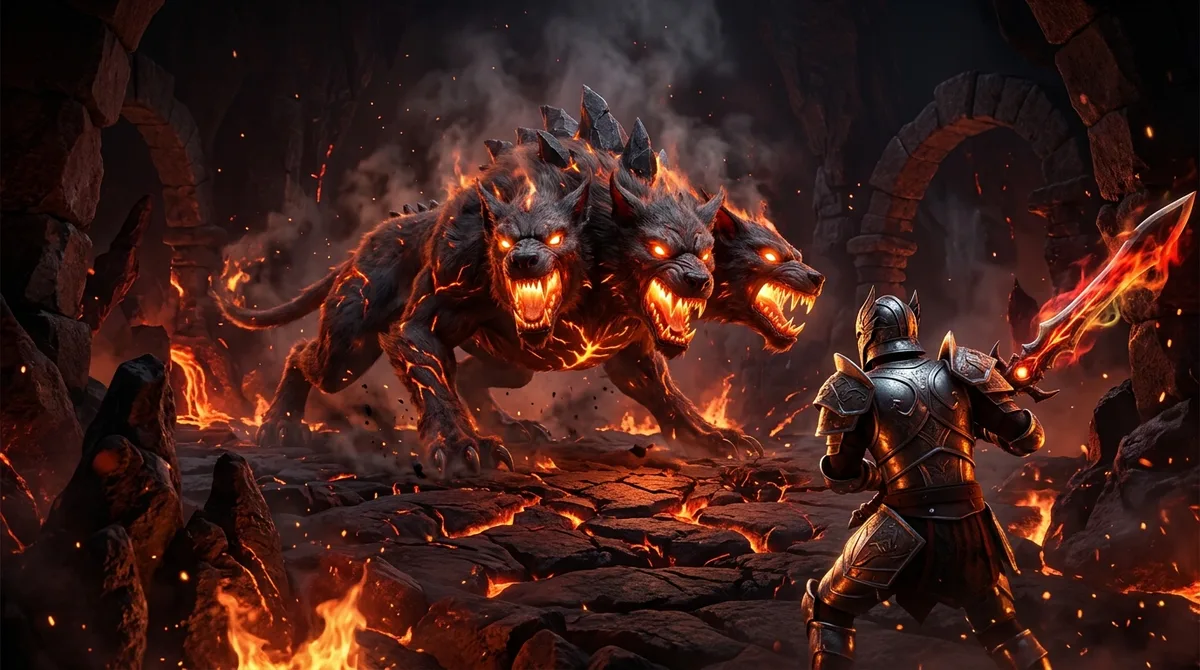
Arclight is the accessible melee weapon to plan around, while Emberlight and the Scythe of Vitur are the high-end picks for players with more gear and gold. Your best choice depends on where your account is right now.
Arclight is a practical starting point for Cerberus. If your melee setup is still coming together, it gives you a workable weapon without needing a top-tier upgrade first. Build your kit around it, then add upgrades as your account grows.
- Arclight: the accessible melee weapon for newer setups
- Emberlight: a high-end melee option on the strategy list
- Scythe of Vitur: the top melee pick, ranked above Emberlight
- Bracelet of slaughter: extra accuracy and damage on your Slayer task
The OSRS Wiki’s Cerberus strategy page lists Arclight and Emberlight among its recommended melee weapons. It ranks the Scythe of Vitur above Emberlight in its top melee picks, so the Scythe is the one to aim for if you already have the gold and gear to support it.
Bracelets of slaughter help with damage output for many setups. Cerberus is a Slayer monster, and you’re fighting her on a hellhound or Cerberus task, so the bracelet’s boost applies in the lair. It pairs easily with a melee weapon and costs far less than a top-end upgrade.
Magic setups are affected by a change to the boss itself. On 9 April 2025, Cerberus’s Magic defence bonus dropped from +100 to +65. A lower defence bonus means your magic attacks land more often, so a magic setup gets more out of each attack than it did before that date. If you swap between magic and melee, check your gear against the new number before you commit to a plan.
The spectral spirit shield and Ward of Arceuus are about protecting your Prayer points rather than dealing damage. They lower the drain from Cerberus’s souls, so your Prayer bar lasts longer during a long trip. Decide early whether a stronger weapon or a drain-reducing item matters more for the way you plan to fight.
What Does It Take to Upgrade to Emberlight?
To upgrade to Emberlight, you need an Arclight, a tormented synapse, and at least level 74 Smithing. The path is simple, so you can plan each piece before you spend any gold.
Start with the Arclight. It’s the accessible melee weapon in this guide, and it lets you fight Cerberus while you save for the upgrade. You don’t have to wait until you have the Emberlight parts to practice your prayer switches and attack count.
Tormented synapses are the cost to check first. Look up the current price on the Grand Exchange before you commit, because the synapse is the piece most likely to strain your budget. Compare that price with the gold you have banked, and decide whether you can afford it now or should keep training and saving.
Smithing is the skill gate. You need level 74 before you can make Emberlight, so open your Skills tab and see how far you are. If you’re short, plan your training time alongside your gold goals so neither one stalls the other.
Here’s the route to follow, one step at a time:
- Get an Arclight and use it on your Cerberus tasks.
- Check the current tormented synapse price on the Grand Exchange.
- Train your Smithing level to 74 or higher.
- Save enough gold to cover the tormented synapse and your other supplies.
- Combine your Arclight with a tormented synapse to make Emberlight.
Emberlight is a strong middle step, not the final stop for melee. The Scythe of Vitur ranks above it among the top melee picks, so Emberlight works best as a stepping stone. Use it to build your damage while you aim for the Scythe once your account and gold can support that bigger jump.
Is Cerberus Worth the Time and Gold?
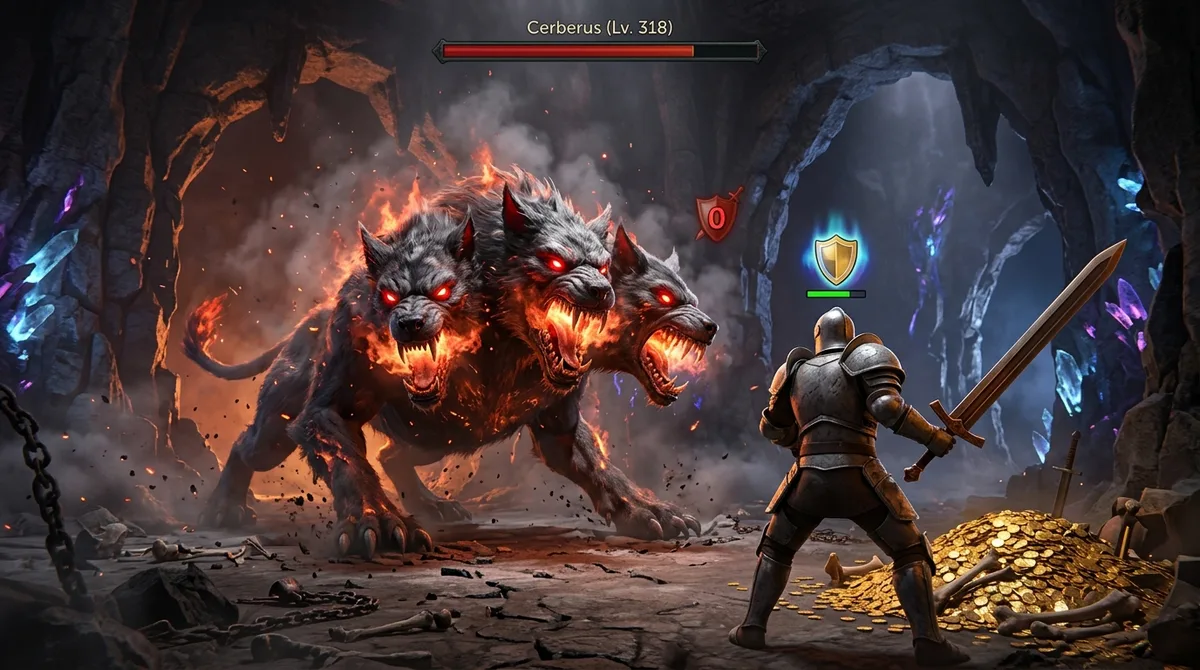
Cerberus is worth your time if the kills you finish, the loot you collect, and the supplies you spend add up to a result you’re happy with. Your gear, your prayer setup, and a bit of luck all shape that result, and nobody can promise a set number. It helps to look at each factor on its own.
Start with kills per hour. Your gear, your prayer setup, and how well you keep up with the attack count all decide how many kills you finish in an hour. A player who knows the triple attack is due on attack 11 and has prayers ready for the soul attack on the seventh attack will lose less time than someone still reacting to every hit. Cerberus respawns 9 seconds after she is defeated, so a smooth routine lets you start the next fight quickly. That quick restart is where many extra kills come from.
Profit per hour works differently. It depends on the value of what drops, what you spend on supplies, and how fast you kill. Two players can fight the same number of times and finish with very different totals, because one of them used more Prayer points and more consumables along the way. Before you count a trip as profitable, add up what you spent on prayer restores, food, and any other supplies, then compare that total with the loot you actually received.
Unique crystal drops are the main high-value loot from Cerberus, and they are rare. Because of that, don’t judge the boss by one trip or one good hour. A single strong drop can lift the profit of an entire session, but a long run without one is common, even for careful players who fight well.
Drop rates are random, so dry streaks are normal. A dry streak is a stretch of kills with no valuable drop, and it can last much longer than you expect. Plan for that in your budget by setting aside enough gold for several trips before you expect a return. Keep your supply money separate from your savings, so a slow run doesn’t leave you unable to restock your prayer potions or food. If your bank can’t handle a long dry streak, Cerberus may not fit your budget yet, and that’s a fair answer.
Check current prices on the Grand Exchange before every trip. Loot and supply prices change, so a drop that looked valuable last week may be worth less today. The cost of your prayer potions or food may have moved too. A quick look before you pack tells you whether the numbers still make sense for the trip you’re planning.
What Supplies Should You Budget For?
Prayer potions are your biggest supply cost in the Cerberus lair, followed by food and boost potions. Once she drops below 400 hitpoints, the soul attacks keep draining your Prayer points, so you’ll go through restores faster than almost anything else in your bag.
Pack a list before you log in. Most trips need three main groups of supplies:
- Prayer potions to restore the points that soul attacks drain away
- Food such as sharks to heal damage from her standard melee, ranged, and magic hits
- Boost potions like super combat or ranging potions for the combat style you plan to use
Before you start, compare the prices of prayer potions and food on the Grand Exchange. Prices move from day to day, so a restock that looks cheap today may cost more tomorrow. Write down the price of each item you plan to buy, then multiply by the number you need for the trip. That total is your supply budget, and it tells you what a trip will cost before you spend anything.
Next, set a loss limit before each session. Decide how much gold you’re willing to lose, and stop once your supplies have used up that amount. This is how you budget for dry streaks, because a long run without a valuable drop is normal, even for careful players. A fixed limit keeps one bad session from draining the gold you need for future trips.
Finally, use the Grand Exchange price check to compare your supply cost against the expected loot value. Add up what you spent on prayer potions and food, then look up the current value of the drops you’re hoping for. If your supplies cost more than the loot you’re likely to earn, you may want to fight less often or use fewer restores on each trip.
Planning Your First Cerberus Trip
If you already have 91 Slayer and a hellhound or Cerberus task, your next step is a short practice trip. Bring your Arclight, keep your prayer switches simple, and focus on counting attacks rather than chasing loot. Learning the rhythm on a few quick fights is far more useful than rushing into a long session.
If your Slayer level is still short, make that your first goal. No amount of gear gets you into the lair without it, so train up, then come back to the boss with a clear plan.
Next, look at your bank. Write down the current Grand Exchange prices of prayer potions and food, then decide on a total you’re willing to lose in one session. Keep that money separate from your savings so a dry streak doesn’t leave you short on restores.
Then pick your upgrade path. Stick with Arclight until your Smithing level and your gold both reach the Emberlight steps. Only after that should you start saving for a Scythe of Vitur.
Finally, make a sticky note with three marks: the triple on attack 1, a soul attack on every seventh count, and a lava attack on every fifth count. Check it after each trip. Once you can run that routine without looking, you’re ready for your first real Cerberus fight.