
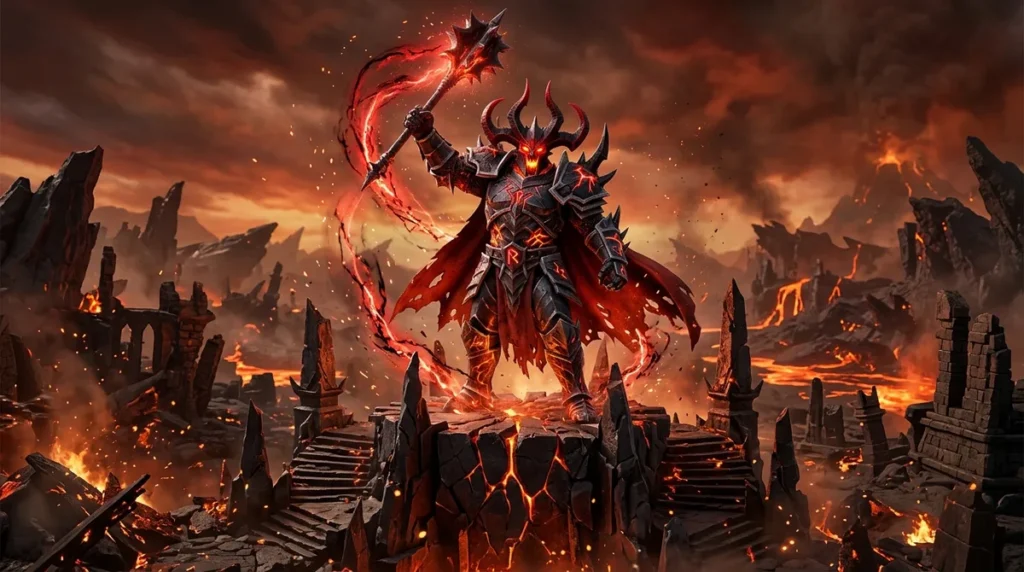
Zamorak started out as a Mahjarrat from Freneskae who rose through the Zarosian Empire to become its highest-ranking general. Then he turned on his master, Zaros, and ascended to godhood. This rebellion is the starting point of RS3 Zamorak lore, and it explains almost everything that follows, from his feud with Saradomin to the wars that still shape Gielinor today. Picture him as the most dangerous servant Zaros ever had, the one who knew the empire’s weak spots because he helped run it.
His coup used two powerful relics, the Staff of Armadyl and the Stone of Jas. According to the RuneScape Wiki, this betrayal marked the beginning of the Third Age and the God Wars, a conflict that lasted four millennia. Near its end, Zamorak used the Stone of Jas to devastate Forinthry, creating the Wilderness you may know well from your own runs. To understand why he did it, you need to know what he believed, and that is where his story gets interesting.
Key Takeaways
- If you want Zamorak’s story in order, start with the God Wars history, then play Twilight of the Gods (released 6 June 2022), Aftermath (4 July 2022), Daughter of Chaos (1 August 2022), and In Succession (5 December 2022).
- You can follow most of Zamorak’s story without fighting him, because the lore pages in the Elder God Wars Dungeon and the Zamorakian Undercity Elite Dungeon fill in his history.
- Zamorak’s betrayal of Zaros, carried out with the Staff of Armadyl and the Stone of Jas, began the Third Age and the God Wars, a conflict that lasted four millennia.
- Zamorak used the Stone of Jas to devastate Forinthry near the end of the God Wars, creating the Wilderness that you cross on your own RS3 runs today.
- Zamorak’s boss fight in the Elder God Wars Dungeon comes in Story, Normal, and Enrage modes, so you should pick the mode that matches your gear and confidence rather than the most impressive-looking one.
Who Was Zamorak Before He Became a God?
Zamorak was a Mahjarrat from Freneskae who climbed the ranks of the Zarosian Empire until he commanded its armies. To see why that mattered, you first need to know what a Mahjarrat is. The Mahjarrat are a race of powerful beings bound to Zaros, the god who ruled the empire. They were not ordinary soldiers. They were among the strongest servants Zaros had, so a Mahjarrat could hold real power in his court.
Zamorak did not coast into his rank. Zaros’s empire rewarded ability, and Zamorak had a sharp eye for talent. He later elevated Viggora and Moia because of what they could do, not because of who they knew. He valued people who could prove themselves in a hard fight, and he expected the same from everyone around him.
Rank meant control. As the highest-ranking general, Zamorak led the forces that kept the empire running. He knew its supply lines, its weak points, and which officers were loyal and which were not. An outside enemy would have needed extensive spying to learn what Zamorak already knew from his long service.
His rank also gave him a clear view of Zaros himself. Zamorak believed the empire had stopped moving forward and was stagnating at the limit of its growth. He saw a master who was content to hold what he had, and that frustration, more than simple ambition, pushed him toward rebellion.
The army and the access he gained through his position were the tools he needed for the coup. He could move troops, gather allies among the officers he had promoted, and get close to the places where Zaros kept his most important things. A general who has been trusted with everything is the hardest kind of traitor to spot, and Zamorak was exactly that.
How Did Zamorak’s Betrayal Start the God Wars?
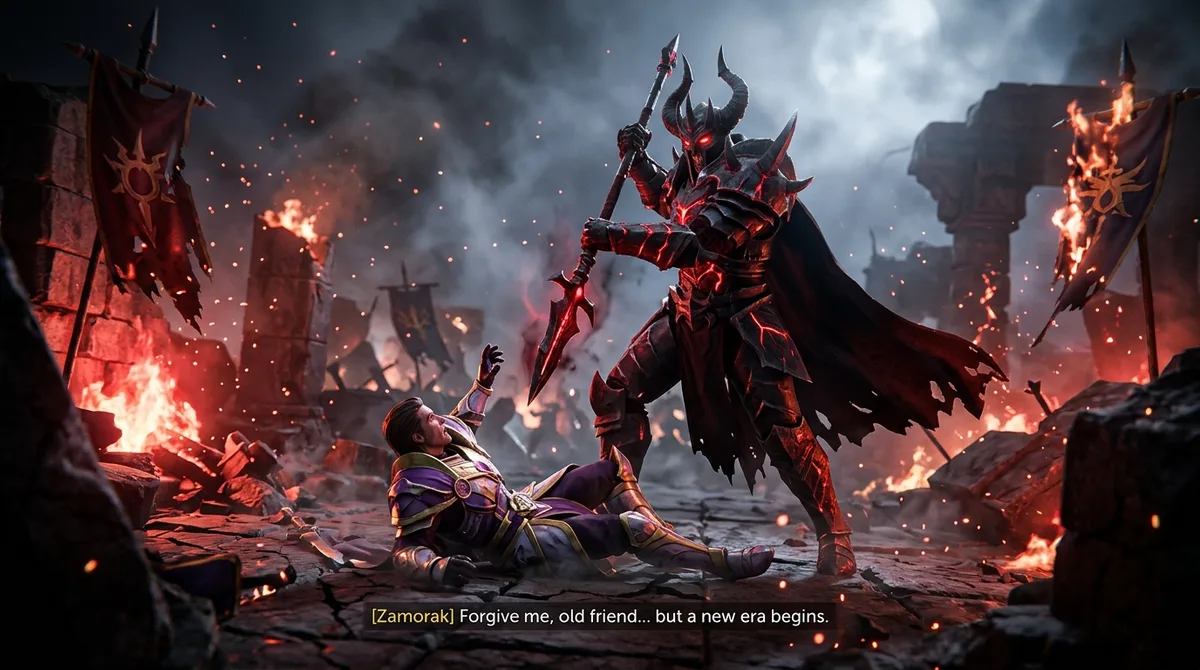
Zamorak’s betrayal began when he turned on Zaros near the end of the Second Age, using his rank and access to strike at the god he had served for ages. He had grown frustrated with an empire that seemed unable to grow any further. In his eyes, Zaros was happy to protect what he already had, and Zamorak wanted something more.
Consider what it meant to be the man who ran the army. Zamorak knew where Zaros’s power was kept and how the empire’s defenses worked. He could plan a move that no outsider could have managed, because he had spent years inside the walls of the court.
The coup itself depended on two relics. The Staff of Armadyl and the Stone of Jas were among the most powerful objects in the empire, and Zamorak used them to challenge his master directly. Holding those items gave him the strength to overthrow Zaros, and it shifted the balance of power in a single moment.
That betrayal is the reason the Third Age began. Before it, the world was shaped by Zaros’s empire. After it, a new order took hold, and the gods of Gielinor began fighting for control. The fighting that followed became the God Wars, a struggle that dragged on for four millennia and reshaped the lands you explore today.
For Zamorak, the rebellion was not just about taking a throne. It was a statement that the old order had to fall so that something stronger could rise. Many of the people who fought for him and against him were drawn into a conflict that started with one general’s choice to stop serving his master.
What Does Zamorak Believe About Strength?
Zamorak believes people grow stronger by overcoming chaos and adversity. He calls this idea “strength from chaos and adversity,” and he means that you improve yourself by pushing through the obstacles in your way rather than avoiding them.
Think of a boss you keep failing until you learn its attack patterns and finally win. Zamorak would say the struggle is the point. Every hard fight shows you what you are capable of, and every loss shows you what needs work.
He also argues that trials test people. A hard challenge separates those who can rise to it from those who cannot, and the ones who meet it come out stronger. For Zamorak, that is the test of who deserves responsibility and power.
Viggora and Moia are the clearest proof of this belief. Zamorak raised them because of what they could do, not because of their family or connections. Their rise shows the other side of his philosophy: if you prove your ability, he will give you a place among his servants.
His path to that strength is not gentle, though. Zamorak’s pursuit of his ideal involves conquest and violence. During the God Wars, his forces killed many aviansie who fought for Armadyl, and that bloodshed is one reason Armadyl still resents him today.
This is why his followers see him as a teacher as well as a conqueror. To them, a hard fight is a lesson, and a loss is a step toward becoming someone who can win the next one. To his enemies, that same lesson is paid for in ruined lives and broken peoples, which is why the debate around Zamorak never really ends.
Why Are Zamorak and Saradomin Enemies?
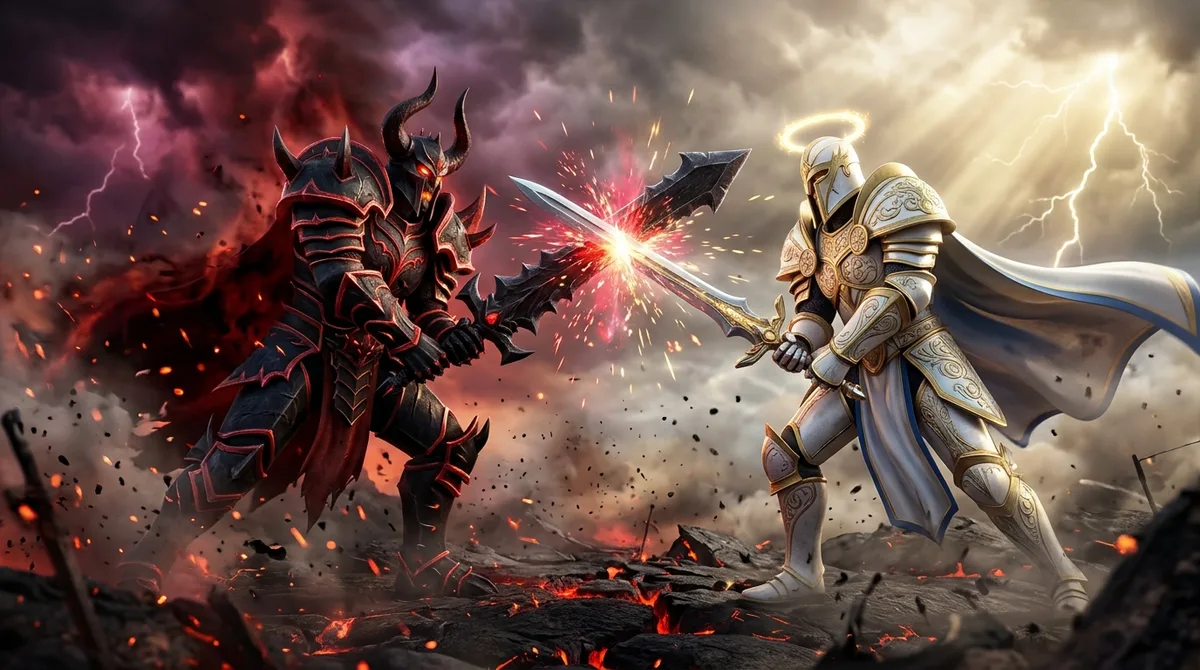
Zamorak and Saradomin are enemies because they hold opposite beliefs about how the world should work, and each sees the other as the biggest threat to his cause. Saradomin is Zamorak’s arch-enemy and his philosophical foil. Zamorak says strength comes from chaos and adversity, while Saradomin stands for order and protection, so the two gods clash over almost everything. Their rivalry was not a simple war with two fixed sides, though. When a larger danger appeared, the two gods sometimes set their hatred aside and allied against a shared threat. The Zarosians were the clearest example, since they were the empire Zamorak once served and a power that neither god wanted to see grow unchecked. The fighting between them came at a heavy cost for others. During the God Wars, Zamorak’s forces killed many aviansie who fought for Armadyl. Aviansie are a bird-like race, and the losses were so severe that the species came close to dying out. Armadyl never forgot what happened. He resented Zamorak for the near-extinction of his original race, and that grudge turned the aviansie’s suffering into a personal wound rather than just another battle loss. For Armadyl, Zamorak’s war was not only a clash of philosophies. It was an attack on his own people. If you want to understand why these two gods never settle their differences, start with the aviansie. Their losses show how the rivalry reached far beyond the gods themselves and into the lives of the races who followed them.
What Destroyed Forinthry and Created the Wilderness?
The God Wars ended when Zamorak used the Stone of Jas to devastate Forinthry, and that blow created the Wilderness you cross today. The conflict had dragged on for four millennia by then, so the destruction was the final act of a very long war between the gods.
Forinthry was a land of settled people and old cities before the stone’s power tore through it. The devastation left a scarred landscape that never returned to its former shape. Over the ages, that ruined territory became the Wilderness, a region where the gods’ power still lingers and where danger waits around every corner.
Think about what that means the next time you head into the Wilderness for a Slayer task or a PvP fight. The rough, open ground you walk across is not just a backdrop. It is the physical result of a god’s rebellion, and the terrain still carries that history.
The Wilderness is Zamorak’s home turf because he made it. The same stone he used to challenge Zaros reshaped the land into a place that suits his philosophy of strength through hardship. Those who survive its dangers are the ones he would call worthy, which is why his followers still feel most at home there.
If you want to see how that story loops back, look at the Edicts of Guthix, the laws that Zamorak’s war pushed against. The Elder God Wars would later return to those laws, so the Wilderness fits into a much bigger story than a single battle.
How Does the Elder God Wars Storyline End?
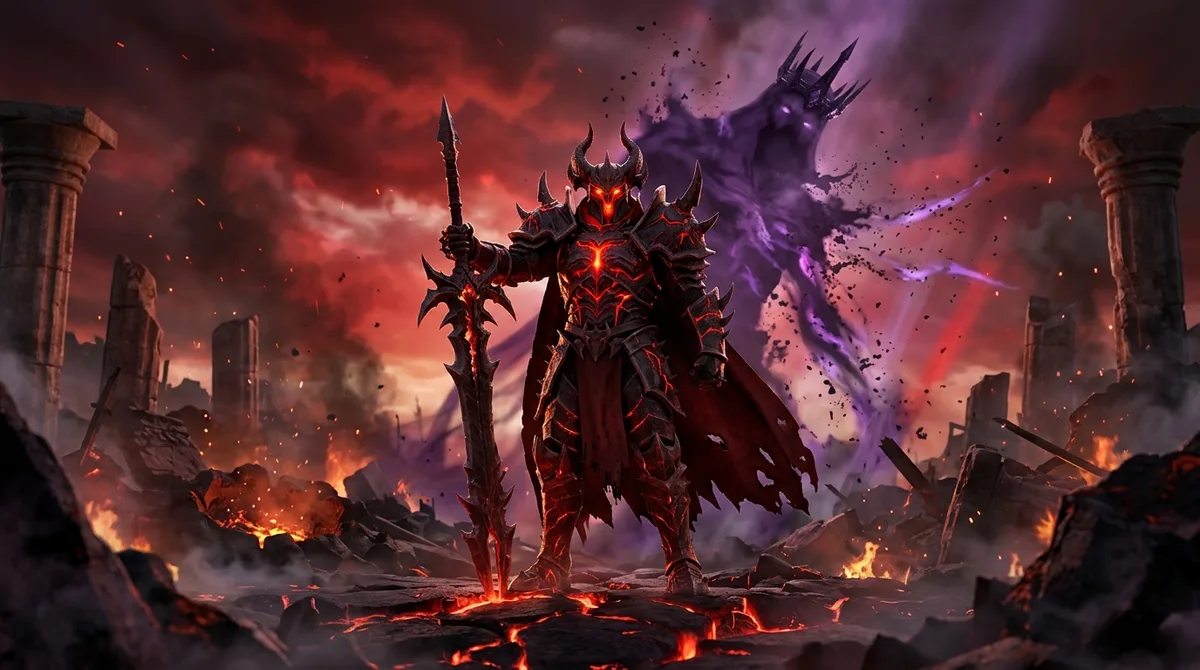
The Elder God Wars storyline wraps up across two releases. Twilight of the Gods came out on 6 June 2022, and Aftermath followed on 4 July 2022.
In Twilight of the Gods, you work with Saradomin, Zamorak’s arch-enemy, to investigate what Zamorak is doing. The two gods have fought for ages, so seeing Saradomin ask for your help shows how serious the threat has become. Your investigation is the first step toward the quest’s real goal.
That goal is a plan to restore Guthix’s Edicts and banish the gods from Gielinor. Restoring the Edicts is the key, but it comes at a price. You sacrifice the World Guardian’s powers to make the plan work. The ending asks a lot from the hero and from the world you have been defending.
Aftermath, released on 4 July 2022, continues the Elder God Wars storyline and carries the story past the main plan. Its release closed out the arc that began with Zamorak’s betrayal of Zaros.
If you are finishing the quest now, pay attention to the 23 March 2026 patch. It fixed Twilight of the Gods so the quest’s mystical wisp appears as expected. If the wisp failed to show up for you before, the patch corrects that problem, so you can carry on through the quest without getting stuck.
Where Does the Legacy of Zamorak Quest Line Pick Up?
The Legacy of Zamorak quest line picks up with Moia, the follower Zamorak once elevated, and it follows her rise as the forgotten warriors rally to her. The story leaves Zamorak’s own schemes behind and asks what happens to the people who served him once he is gone. The two quests below are best played in the order they came out.
The first is Daughter of Chaos, released on 1 August 2022. It is the first Legacy of Zamorak quest, and it focuses on Moia after the Zamorak boss encounter. Instead of chasing the god, you follow the person who now has to decide what comes next. The quest sets the stage for everything that follows in this line.
The second is In Succession, released on 5 December 2022. It carries Moia’s rise to its next stage. Moia defeats Bilrach, the forgotten warriors swear fealty to her, and Adrasteia is crowned. Those three events mark a turning point, because a leaderless group of fighters becomes a loyal force with a new ruler.
Here is how the two releases compare at a glance:
- Daughter of Chaos (1 August 2022): the first Legacy of Zamorak quest, centred on Moia after the Zamorak boss encounter.
- In Succession (5 December 2022): Moia defeats Bilrach, the forgotten warriors swear fealty to her, and Adrasteia is crowned.
Two names deserve your attention while you play. Bilrach is the figure Moia defeats, so his role in the story ends at the moment of her victory. Adrasteia is the one who is crowned, which makes her the name to watch as the line of followers takes shape.
Pay attention to dialogue when these names come up. Writing them down in a notepad or taking a quick screenshot can help you keep track of who is who, especially if you pause between quests. Each character’s place in the story will matter more as the line continues.
The shift from Zamorak to his followers is the real change in this part of the lore. Earlier, you learned about a god who rebelled against his master. Here, you see how that rebellion left a group of warriors searching for a leader and how Moia stepped into that gap.
Can You Follow the Zamorak Story Without Fighting Him?
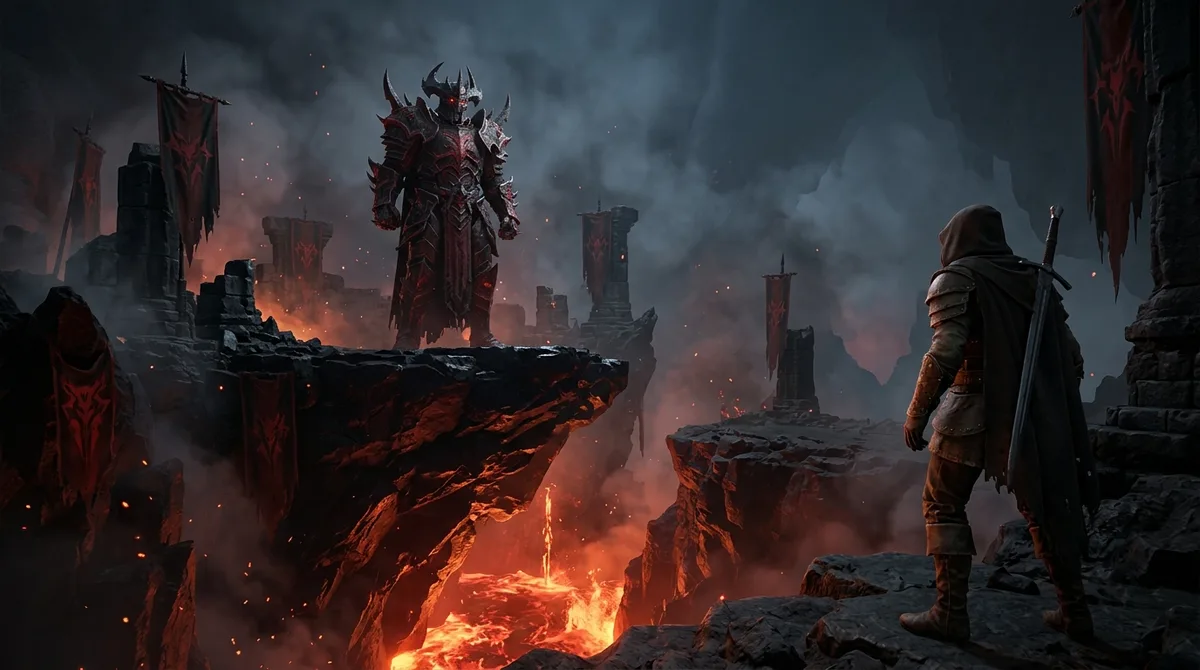
Yes, you can follow most of the Zamorak story without ever taking on the full boss fight. The lore is spread across the Elder God Wars Dungeon, its lore pages, and the Zamorakian Undercity Elite Dungeon, so you can read much of his history before you commit to a hard fight.
Zamorak is the final boss of the Elder God Wars Dungeon, so you reach him only after working through the rest of the dungeon. The rooms before him carry plenty of background. Read the lore pages you pass, since they fill in the gaps between the events you have already learned about.
The boss fight comes in several difficulty modes: Story, Normal and Enrage. Story is the gentlest starting point, Normal raises the challenge, and Enrage is the toughest setting for players who want a real test. Choose the mode that matches your gear and your confidence, not the one that looks most impressive.
Group size changes the fight as well. The difficulty scales with the number of players, so a team that handles one size well may struggle at another. Solo players should expect a different fight from a full group, and both should plan their setup before they enter.
Enrage is the system that increases pressure as the fight goes on. The longer the fight lasts, the more dangerous it becomes, so a slow or messy start can make the later stages much harder. Keep your pace steady and do not wait too long to react.
Hexes and runes are two mechanics you need to track during the fight. Knowing which one is active tells you how to respond, and mixing them up is a common reason players lose their rhythm.
If you want the story without the full fight, the lore pages and dungeons below let you follow the narrative without fighting him. You can find the story pieces here:
- The lore pages inside the Elder God Wars Dungeon, read as you move through its rooms.
- The Zamorakian Undercity Elite Dungeon, which adds more of his followers’ history.
Killing Zamorak can also drop rewards from his drop table. Those drops are random, so do not plan your trip around one specific item. Treat them as a bonus on top of the story, not the reason you go in.
Where Should You Start Reading Zamorak Lore?
The best order is the God Wars history first, then Twilight of the Gods, Aftermath, and finally the Legacy of Zamorak quests. Each step builds on the last, so the names and events will make more sense as you go.
Before you start any quest, read the background so the key events are fresh in your mind. Then follow these steps:
- Read the God Wars history on the lore pages, starting with Zaros’s empire and the betrayal that began the Third Age.
- Play Twilight of the Gods, and watch how Saradomin and Zamorak are portrayed in the investigation.
- Finish Aftermath to close out the Elder God Wars arc.
- Play Daughter of Chaos to follow Moia after the Zamorak boss encounter.
- Play In Succession to see Moia’s rise and the crowning of Adrasteia.
Keep the Zamorakian Undercity Elite Dungeon and the Elder God Wars Dungeon lore pages open as you go. They fill in the gaps between quests and explain the followers you meet along the way.
Be careful with spoilers if you have not finished the quests. Skip any wiki page that describes how a quest ends or what happens to its characters until you have reached that point yourself.
Your Next Step Into Zamorak’s Story
If you are new to Zamorak’s story, your next step is the lore pages inside the Elder God Wars Dungeon. Read them on your next trip there, and keep a short list of the names you meet, such as Viggora, Moia and Bilrach. A notepad or a phone note is enough, and it will save you from guessing who is who when you reach the quests.
If you have already finished the Elder God Wars storyline, go straight to Daughter of Chaos. Set aside a session long enough to finish it in one sitting, since the quest picks up right after the Zamorak boss encounter and the story is easier to follow without long breaks.
Pay attention to the characters who seem minor at first. Forgotten warriors, aviansie and the followers in the Zamorakian Undercity often explain why Zamorak’s rebellion still matters to the people who came after him.
Then compare what you have learned with the Wilderness you already know. Walk through the ruined ground near your favourite Slayer spot and ask yourself what the land looked like before the Stone of Jas tore through Forinthry. That small exercise makes the lore feel like part of the game you play every day, not just a story you read once.