
OSRS Crafting training comes down to picking the right method for your level, budget, and account. Crafting runs all the way to level 99, which takes 13,034,431 experience. The OSRS Wiki reported that 259,731 players had reached that mark as of 1 October 2026. Every method in this guide trades off four things: how fast the XP comes in, how much attention it needs, whether your account can access it, and what the supplies cost on the Grand Exchange. The method that gives the most XP per hour often needs the most gold up front, so the cheapest route is not always the quickest.
You can start at level 1 with leather bodies, which need a needle and thread, but the leather bill grows fast. In one price snapshot, a single leather cost 240 coins, so set your budget before you begin. Once you reach level 20, cutting sapphires gives 50 XP per gem and is a budget-friendly pick for the middle levels. Free-to-play players have a narrower set of options, such as hardleather bodies, which you can train from level 28 up to 99. Material prices move often, so treat every coin figure here as a snapshot and be ready to switch methods when the numbers change.
Key Takeaways
- Choose your Crafting method based on your level, your budget, and whether your account type can access it, because every method trades off XP per hour, attention, upfront gold, and access.
- If you are at level 20 or higher and want a budget-friendly start, cutting sapphires gives you 50 XP per gem, and free-to-play players can cut sapphires, emeralds, rubies, and diamonds without membership.
- If you are a member at level 54 or higher, water battlestaves give you 100 XP per craft, but you should set aside enough gold to restock battlestaves and water orbs constantly, since the material bill never stops.
- If you are a member at level 77 or higher with enough gold for leather, dragonhide bodies are the fastest Crafting route, though a nine-body green inventory can cost about 43,173 coins in leather at one listed guide price.
- Check the current Grand Exchange prices before you commit gold to any Crafting method, because prices change often and the best route this month may not be the best route next month.
Four Trade-Offs That Decide Your Crafting Route
Level 99 is the finish line most Crafting players are chasing, and it takes 13,034,431 experience. The OSRS Wiki reported that 259,731 players had reached 99 Crafting as of 1 October 2026, so you will have plenty of company at the top. Along the way, Crafting covers everything from stringing amulets to making high-level black dragonhide bodies from level 84.
Every method sits somewhere on four trade-offs. The first is experience per hour. Water battlestaves from level 54 give 100 XP each, while unpowered orbs from level 46 give 52.5 XP each. The second is attention, meaning how many clicks you make and how often you walk to the bank. The third is cash up front, since the faster methods usually need the most gold before you start. The fourth is whether your account type can use the method at all. Golem Crafting on Wyrmscraig, released on 29 July 2026, requires the quest Fallen From Grace and level 60 Crafting. Reaching Fallen From Grace takes 62 Sailing, 60 Crafting, 47 Runecraft and 53 Mining, so free-to-play players cannot use that route.
Treat every XP figure as a guide, not a promise. Estimates depend on the crafting and banking speeds they assume. Many online Crafting calculators use best-case training rates, so your own hourly total may come in lower. Your click speed, your bank trips, and the mix of items you make all change the result.
Prices move too. The Grand Exchange can turn a cheap method into an expensive one within weeks, so the best route this month may not be the best next month. Check the current numbers before you commit your gold to any method.
Cutting Gems: The Budget Backbone From Level 20
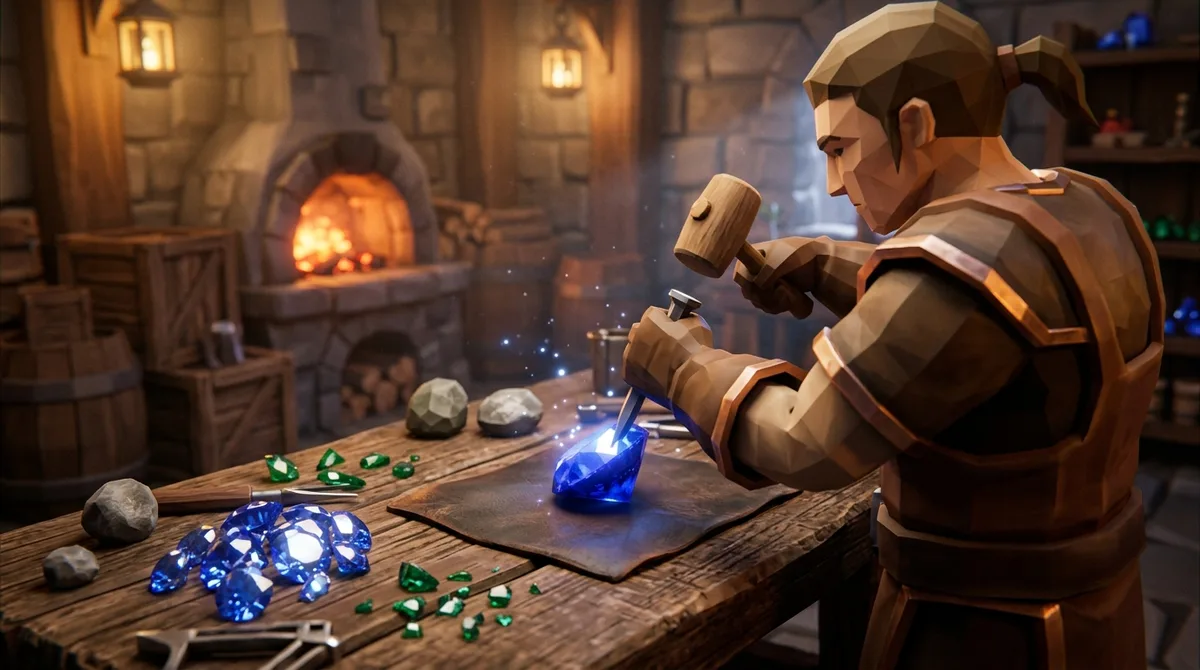
Cutting gems is the method most players turn to once they reach level 20. Take an uncut gem, use a chisel on it, and choose Cut All. A full inventory holds 27 uncut gems, so each batch gives you 27 cuts. Cutting sapphires gives 50 XP per gem, and the pay-to-play Crafting training guide on the OSRS Wiki estimates 139,000 XP per hour at 2,780 gems cut per hour. That makes gem cutting the fastest Crafting method up to level 77.
The catch is the cash. In one price snapshot, an uncut sapphire had a 160 GP buy price, so a 27-gem batch needs about 4,320 GP of buying capital before you sell the cut gems. The gap between the uncut and cut prices decides whether the method pays. Higher-level gems give more XP per cut. Emeralds unlock at level 27, rubies at 34, and diamonds at 43, and diamonds reach about 298,850 XP per hour at the same rate. Free-to-play players can cut all four, so you do not need membership for this route. Many players start here at level 20 and then compare other methods from level 62, when fire battlestaves open up.
Higher-level gems give more XP per cut. Emeralds unlock at level 27, rubies at 34, and diamonds at 43, and diamonds reach about 298,850 XP per hour at the same rate. Free-to-play players can cut all four, so you do not need membership for this route. Many players start here at level 20 and then compare other methods from level 62, when fire battlestaves open up.
Gem cutting is not AFK-friendly. Each inventory finishes quickly, so you have to bank the cut gems and withdraw another batch again and again to keep the listed rates.
At a glance
- Best for: budget-friendly middle-level XP with sapphires, emeralds, rubies, and diamonds
- Level Range: from level 20, with other methods worth comparing from level 62
- Starting Cost: about 4,320 GP for a 27-sapphire batch at a 160 GP uncut price snapshot
- XP Per Hour: about 139,000 for sapphires and 298,850 for diamonds
- AFK Level: not AFK-friendly, since each batch needs banking and restarting
Battlestaves: Cheap, Fast XP From Level 54
Battlestaff crafting is a members-only method for the upper-middle levels. You use a charged elemental orb on a regular battlestaff to make an elemental battlestaff. The ladder starts with water at level 54, which gives 100 XP per craft. Earth at level 58 gives 112.5 XP, fire at 62 gives 125 XP, and air at 66 gives 137.5 XP. Once a batch is going, each staff takes two ticks. At a planning pace of 2,450 crafts per hour, water battlestaves give about 245,000 XP per hour, and the OSRS Wiki says perfect banking can reach 2,625 crafts per hour.
Expect to bank often. An inventory holds 14 orb-and-staff pairs, so at 2,450 crafts per hour you will finish roughly 175 batches each hour and bank again and again. That makes battlestaves a medium-attention bankstanding method rather than AFK training. Keep an eye on your supplies and your banking loop so you never run out halfway through a batch.
The material bill never stops. At the listed guide price on the Jagex Grand Exchange page, a regular battlestaff was 7,907 coins, and a water orb was 698 coins. Every craft uses both, so you will restock constantly, and your total spend grows with the number of staves you plan to make. Prices shift, so check the current listing before you buy.
Most players find this method worth it from level 54 through 77. From level 77, dragonhide bodies are faster, and they are much faster from level 84, so that is the point to switch.
At a glance
- Best for: members who want solid bankstanding XP from level 54
- Level Range: 54 to 77, with water at 54, earth at 58, fire at 62, and air at 66
- Starting Cost: 7,907 coins for a battlestaff and 698 coins for a water orb at the listed guide price, with restocking needed
- XP Per Hour: about 245,000 on water at 2,450 crafts per hour
- AFK Level: medium attention, not AFK-friendly
- Membership: members only
D’hide Bodies: The Fastest Route From Level 77
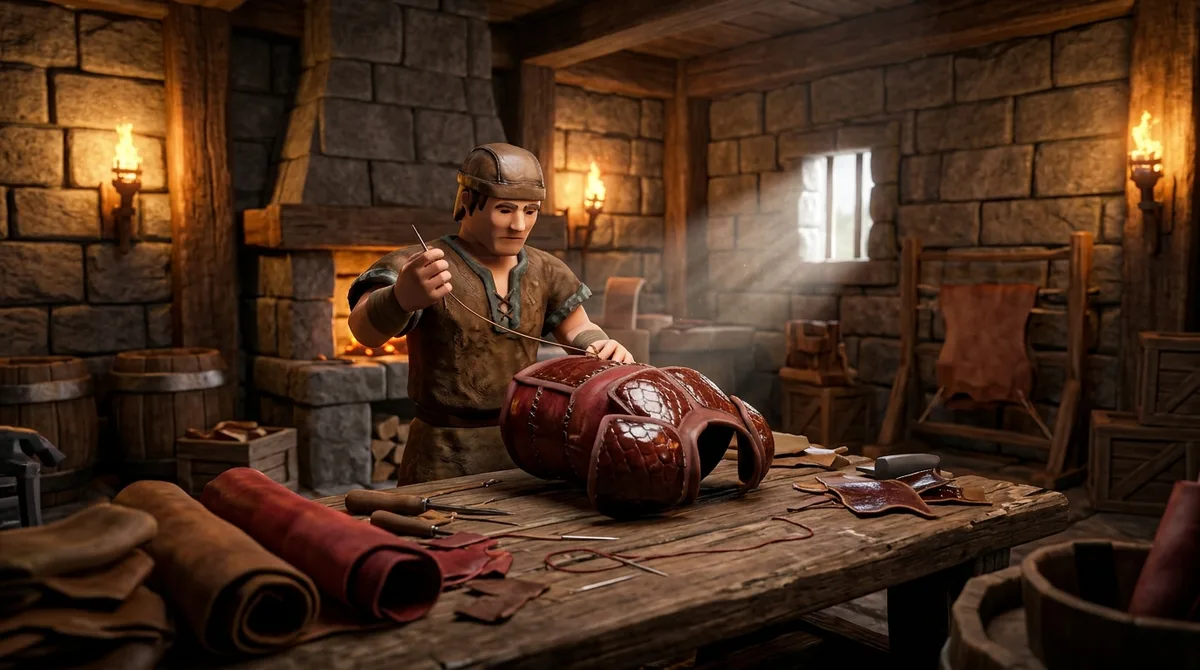
D’hide bodies are the crafting method to reach for once you hit the upper levels. You make them by using a needle on dragon leather, and each body takes three leathers of its colour. Green bodies open at level 63, blue at 71, red at 77, and black at 84, so you can move up the colours as your level rises. The method is especially fast from level 77, when red bodies become available.
Rates depend heavily on how you work. Using eight bodies per inventory, the training guide estimates about 313,410 to 434,730 XP per hour, depending on colour. A costume needle, which you get from the Costumer in Aldarin after finishing Death on the Isle, lets you make nine bodies per inventory instead of eight. That lifts the range to about 317,130 to 439,890 XP per hour. Deposit lock helps you bank without depositing the needle, but these rates assume you pay close attention and bank often, so this is not an AFK method. Dragonhide crafting is also members-only.
Leather is the big cost. At one Grand Exchange guide price of 1,599 coins per green dragon leather, each green body costs about 4,797 coins in leather. A nine-body inventory uses 27 leathers, about 43,173 coins, before you recover anything by selling or alching the bodies. Black bodies can cost a lot, so look at the current leather and body prices before you commit, since these numbers change often.
At a glance
- Best for: players at level 77 and up who want fast XP and have the gold for leather
- Level Range: green from 63, blue from 71, red from 77, black from 84
- Starting Cost: about 43,173 coins for leather in one nine-body green inventory, based on a guide price of 1,599 coins per leather
- XP Per Hour: about 313,410 to 439,890 with a costume needle, depending on colour
- AFK Level: low, since good rates need close attention and frequent banking
- Membership: members only
Glassblowing: The Long-Break AFK Option
Glassblowing is a members-only Crafting method. You use a glassblowing pipe on molten glass to make items that unlock at different levels, starting with beer glasses at level 1. Vials unlock at level 33, unpowered orbs at level 46, lantern lenses at level 49, and light orbs at level 87. Each item uses one molten glass.
Glassblowing is slower than the top methods, but the rhythm is relaxed. At the guide’s assumed pace of 1,750 items per hour, unpowered orbs give 52.5 XP each and about 91,875 XP per hour. You fill one inventory with a pipe and 27 molten glass, make the items, then bank and refill. The guide estimates roughly 50 seconds of idle time per inventory, so you can step away between batches and still keep your XP moving.
The materials are cheap, but you still need some gold to start. At the listed Grand Exchange prices, molten glass cost 84 coins each and the pipe costs 55 coins, so one full inventory came to 2,323 coins. The pipe is reusable, so most of your spending goes on glass, and that total depends on how much you buy or make. Level 46 is a good point to switch to unpowered orbs, because that is where the XP per hour climbs noticeably.
At a glance
- Best for: players who want to train while doing something else, with long breaks between clicks
- Level Range: level 1 (beer glasses) to level 87 (light orbs)
- Starting Cost: about 2,323 coins for one full inventory, including the pipe, in the listed price snapshot
- XP Per Hour: 30,625 for beer glasses up to 122,500 for light orbs, at 1,750 items per hour
- AFK Level: very AFK, with roughly 50 seconds of idle time per inventory
- Membership: members only
Leather Bodies: The Low-Level Start
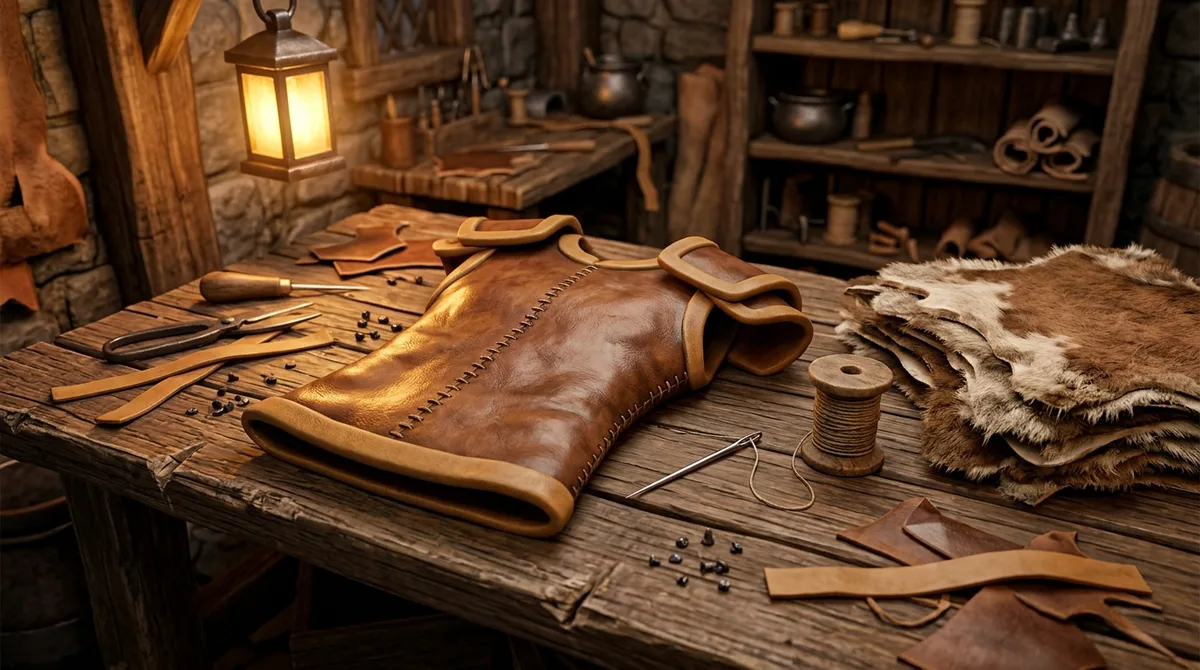
Leather bodies are the first real stop on the Crafting ladder. You can start at level 1 by making leather items with a needle and thread, but bodies unlock at level 14 and give 25 XP each. The training table recommends them from level 14 to 18 and estimates about 35,000 XP per hour. Some third-party guides put the rate closer to 45,000 XP per hour, with a theoretical ceiling of 50,000 at 1,800 to 2,000 items per hour before banking.
The leather bill is the real cost. Each body uses one leather, and in one price snapshot leather sold for 223 coins with thread at 6 coins. Making the 57 bodies needed to reach level 18 takes about 12,783 coins in materials, including roughly 12 thread. Earlier snapshots put a single leather at 240 coins, so the total can add up quickly. Check current prices in the official Grand Exchange item database before you buy in bulk.
Leather bodies are simpler and far less capital-intensive than dragonhide bodies, since each body needs only one leather. They are not AFK-friendly, though. Each body takes three game ticks (1.8 seconds), so you craft one inventory, bank, and repeat. Keep a needle and thread in your inventory while banking, then withdraw more leather.
Use this method early. Train bodies from level 14 to 18, switch to leather chaps at level 18, and leave leather items behind at level 20. It is a short stop, best treated as a warm-up before the higher-XP options later in this guide.
At a glance
- Best for: free-to-play and early-level players who want a simple, low-capital start
- Level Range: 14 to 18, with leather chaps available at 18
- Starting Cost: about 12,783 coins in materials for the 57 bodies needed to reach level 18, in one price snapshot
- XP Per Hour: about 35,000 to 45,000
- AFK Level: not AFK-friendly, since each inventory needs banking and restarting
Cutting Opals: A Quick Low-Level Start
Cutting opals is a quick low-level start for Crafting. The Crafting guide recommends it for levels 1 to 20, before sapphire cutting becomes available. Use a chisel on an uncut opal to cut it. Each successful cut gives 15 Crafting XP, and the guide estimates about 20,000 XP per hour at low levels. Uncut opals are members-only, so you need an active membership to train this way.
The catch is that some opals get crushed instead of cut. A crushed opal gives only 3.8 XP and the gem is wasted, so the guide suggests buying roughly 500 opals to cover the losses. In one price snapshot from 15 November 2026, uncut opals sold for 60 to 65 gp each. That means a 500-opal supply needed roughly 30,000 to 32,500 gp up front, before you sell any cut gems. Prices move, so treat that figure as a snapshot of one day.
Opal cutting is not truly AFK. You withdraw a batch of uncut opals, cut the whole inventory, bank the cut gems, and start again. Those repeated batches mean regular clicks and trips to the bank, so you need to keep your attention on the work.
The guide says to move on to sapphires at level 20, when they become available and offer a higher rate than opals. From there, gem cutting gives more XP per hour, so opals are best kept as your opening method.
At a glance
- Best for: a quick low-level Crafting start before sapphire cutting opens up
- Level Range: levels 1 to 20
- Starting Cost: roughly 30,000 to 32,500 gp for 500 uncut opals, based on a 15 November 2026 price snapshot of 60 to 65 gp each
- XP Per Hour: about 20,000 at low levels
- AFK Level: not truly AFK, since each batch needs banking and restarting
- Membership: members only
Stringing Amulets: The Low-Requirement Profit Pick
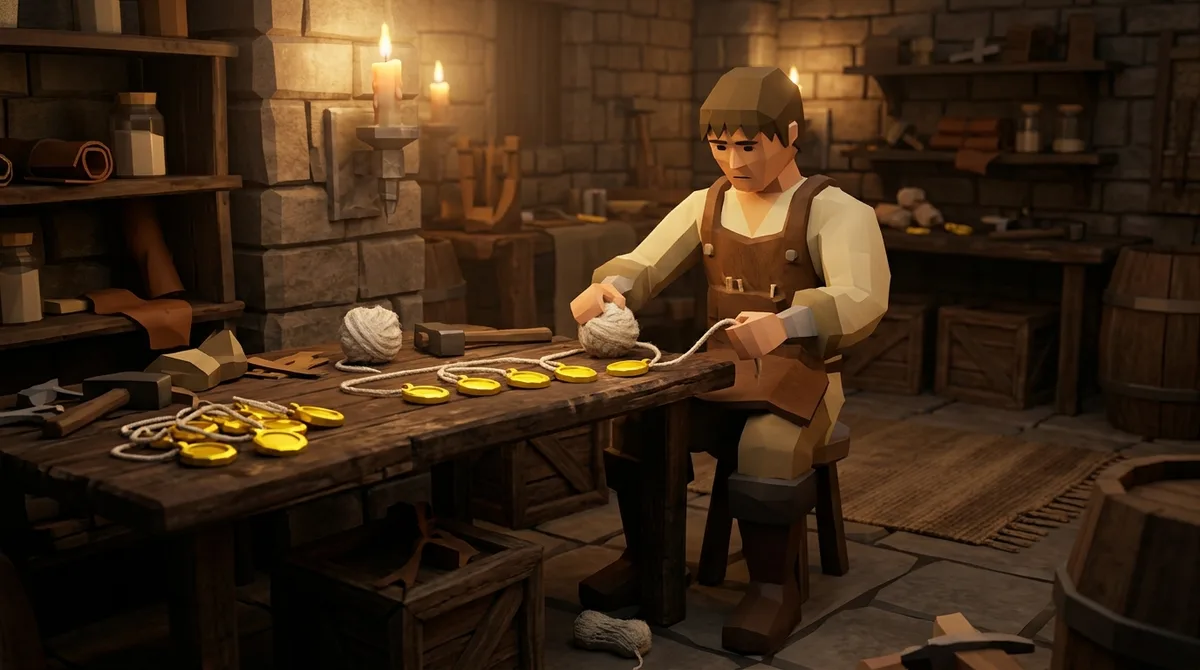
Stringing amulets is one of the simplest Crafting methods you can start at level 1. You need no quest and no special equipment, and free-to-play players can do it anywhere. Use balls of wool on unstrung amulets, then pick Make All to string a full inventory of 14 at once. Each amulet grants 4 Crafting XP.
The XP is small. The OSRS Wiki’s stringing amulets guide estimates 2,520 amulets and 10,080 Crafting XP per hour, assuming a nearby bank and about 3.2 seconds of banking per inventory. Each amulet takes two game ticks, or 1.2 seconds, so a 14-amulet batch runs for about 16.8 seconds before you bank again. That makes this method better for quick sessions and profit than for fast levelling.
Profit is the main reason to try it. Finished amulets may sell for more than the materials cost. In the guide’s diamond amulet example, one hour of supplies totals 4,646,880 gp, while the first 14-item batch comes to about 25,816 gp. Those prices change often, so check the guide’s page for current numbers.
Each batch runs briefly on its own, but you have to keep returning to the bank. You need to check in roughly every 17 seconds, so this is a low-attention method rather than a truly AFK one.
At a glance
- Best for: quick sessions, cheap low-level XP, and possible profit
- Level Range: from level 1, usable at any Crafting level
- Starting Cost: about 25,816 gp for the first 14-item batch in the guide’s diamond amulet example
- XP Per Hour: about 10,080 Crafting XP
- AFK Level: low attention, not truly AFK, with banking roughly every 17 seconds
- Membership: free-to-play
Jewellery: Furnace Crafting for Cost or Profit
Jewellery is a repeatable Crafting method at the furnace, not a separate minigame, and you can start it at level 5. You take a gold bar and the right mould, and for gem jewellery you also cut your gems first and bring them to the furnace. Then you bank the finished items and repeat. Gold rings open at level 5, necklaces at 6, bracelets at 7, and unstrung amulets at 8. Rings, necklaces, and unstrung amulets have free-to-play options, but bracelets are members-only.
Gold jewellery gives 15 to 30 XP per item. At 1,400 gold items per hour, that works out to roughly 21,000 to 42,000 XP per hour, which is slow next to battlestaves or dragonhide bodies. The method suits players who put cost or profit ahead of speed. Unstrung amulets at level 8 are a low-level pick that can turn a profit.
Expect to stay busy. Edgeville furnace is the closest furnace to a bank that has no requirements, and it takes about 65 seconds to fill and craft one inventory. That means roughly 55 to 60 bank-and-furnace trips per hour, so this is an active method, not an AFK one. Wyrmscraig’s furnace is closer to the bank, but you need the Fallen From Grace quest first, and Prifddinas needs Song of the Elves.
Capital is the other side of the trade. In the guide’s cached example, one hour’s supply of 1,400 gold bars for amulets cost 99,400 coins, and the finished amulets were valued at 196,000 coins after tax. Those figures change often, so check the official Old School RuneScape site for current details before you buy in.
At a glance
- Best for: players who prioritise cost or possible profit over XP per hour
- Level Range: from level 5, with gold rings at 5, necklaces at 6, bracelets at 7, and unstrung amulets at 8
- Starting Cost: about 99,400 coins for one hour’s gold bars for amulets, in the guide’s cached example
- XP Per Hour: about 21,000 to 42,000 with gold jewellery at 1,400 items per hour
- AFK Level: not AFK-friendly, with about 55 to 60 furnace-and-bank trips per hour
Drift Nets: Early-Level Profit With Modest XP
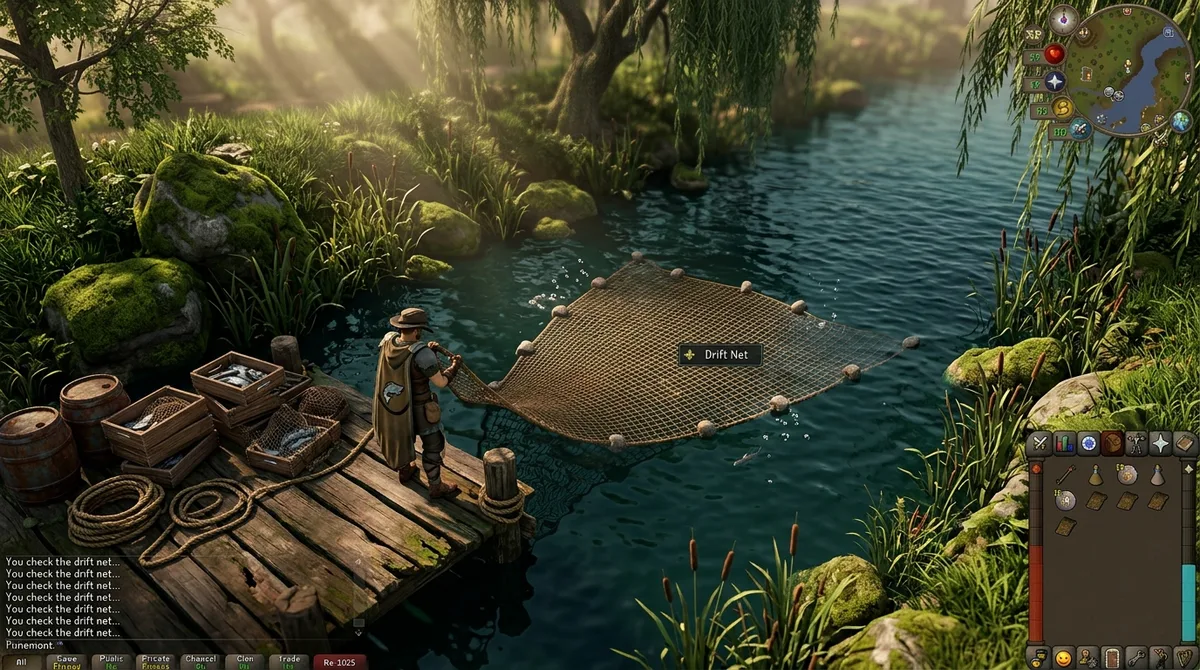
Drift nets are a members-only Crafting method that starts at level 26. You weave two jute fibres into one drift net at a loom, and each net gives 55 Crafting XP. The training guide lists drift nets for levels 26 to 46 or higher and estimates about 60,000 XP per hour. That is modest next to battlestaves or d’hide bodies, but you get a tradable item with every craft.
Jute is the main cost. At a displayed Grand Exchange guide price of 673 coins per fibre, the jute for 1,100 nets comes to about 1,480,600 coins before you sell anything. Whether drift nets pay depends on what the nets sell for compared with the fibre. Check that gap before you commit, because a small jute price rise can erase your profit.
The recommended Fossil Island setup places the loom near a bank chest, which cuts down on walking. To build it, you need Bone Voyage, 29 Construction, four oak planks, one rope, one iron bar, and ten nails. Each net takes three game ticks, or 1.8 seconds, and the top rate of about 1,100 nets per hour assumes you keep paying attention. Drift nets are not AFK, so you will need to stay at the loom and keep restocking jute.
At a glance
- Best for: early-level profit with modest XP
- Level Range: from level 26, through level 46 or higher
- Starting Cost: about 1,480,600 coins for jute for 1,100 nets, at a displayed guide price of 673 coins per fibre
- XP Per Hour: about 60,000 to 60,500
- AFK Level: not AFK, since the stated rate needs close attention
- Membership: members only
Cutting Amethyst: High-Level Variety From Level 83
Cutting amethyst is a members-only method where you use a chisel on amethyst to make bolt tips, arrowtips, javelin heads, or dart tips. Jagex’s 2017 poll on the material described amethyst as a new Mining Guild material meant for high-level arrows, bolts, and javelins. Bolt tips unlock at level 83, arrowtips at 85, javelin heads at 87, and dart tips at 89. Each amethyst cut gives 60 Crafting XP.
The method is slower than many high-level options. The training guide estimates about 165,000 XP per hour, assuming roughly 2,780 amethysts processed per hour. That is less than battlestaves or dragonhide bodies, but it gives you a change of pace once you are past level 83.
The materials are the big expense. The guide listed amethyst at 2,850 coins each, so one 27-amethyst inventory costs about 76,950 coins. An hour’s supply of 2,750 amethysts comes to about 7.84 million coins before you sell anything. Amethyst and finished tips both move with the market, so treat those numbers as a snapshot.
Each inventory takes about 30 seconds to process. You can look away briefly between batches, but you still have to return to the bank and start another one, so this is semi-AFK rather than hands-off.
At a glance
- Best for: members at level 83 and up who want a change of pace from bankstanding
- Level Range: 83 to 99, with arrowtips at 85, javelin heads at 87, and dart tips at 89
- Starting Cost: about 7.84 million coins for an hour’s supply, at 2,850 coins per amethyst in the guide’s listed price
- XP Per Hour: roughly 165,000
- AFK Level: semi-AFK, with about 30 seconds of processing per inventory
- Membership: members only
Mixed Hide Armour: Active Crafting for Levels 68 to 72
Mixed hide is a members-only Crafting method, and it is one of the newer additions to the skill. You make pieces of mixed hide armour from a mixed hide base and the matching animal furs, and you stitch them with a needle or a costume needle. The four pieces unlock in order: the cape at 68 Crafting, the boots at 69, the legs at 71, and the top at 72.
The legs are the star of the set. Each craft gives 210 Crafting XP and takes 3 game ticks, or 1.8 seconds, which implies a theoretical 420,000 XP per hour. That figure ignores the time you spend banking and restocking, so your real hourly total will come in lower. This method is not AFK. You craft repeatedly and have to replenish your base and furs between batches, so expect to stay near the bank.
In one price snapshot, a single legs craft used a mixed hide base and three fox furs and cost about 24,316 coins. That is your up-front capital for one craft before you buy more. You can buy a mixed hide base from Pellem’s Fur Store in the Hunter Guild, or trade for one. Mixed hide legs are a profitable XP option at the displayed prices across levels 60 to 79, but those prices change, so profit can shift quickly.
At a glance
- Best for: members who want strong XP and possible profit once they reach level 71
- Level Range: 68 to 72, with the cape at 68, boots at 69, legs at 71, and top at 72
- Starting Cost: about 24,316 coins for one legs craft in one price snapshot
- XP Per Hour: up to about 420,000 for legs, before banking and restocking
- AFK Level: not AFK-friendly, since you craft repeatedly and restock between batches
- Membership: members only
Golem Crafting on Wyrmscraig: The Newest Option
Golem Crafting was released on 29 July 2026 on the members-only island of Wyrmscraig. You need to complete the quest Fallen From Grace and reach level 60 Crafting first. To start that quest, you need 62 Sailing, 60 Crafting, 47 Runecraft, and 53 Mining.
The method runs in a loop. You mine sunstone, shape it into golems, then power and clothe each golem with Hunter furs to earn Crafting XP and a gem. Each golem uses five sunstones and one eligible fur. Sunstones can be mined on Wyrmscraig, so your main purchase is furs, and their cost depends on the fur type and the current Grand Exchange price. A standard rotation mines 25 sunstones for five golems, and a large fur pouch lets you run five rotations before you refill.
The XP range is wide. The lower-intensity route, using locally hunted goat fur, gives about 100,000 Crafting XP per hour. A high-intensity setup with high Mining, mining enhancers, faster shaping, and high-tier furs can go above 185,000 XP per hour. Clicking each shaping XP drop speeds the next action from four ticks to three, which cuts shaping to about 36 seconds per golem, not counting movement. The sunstone monolith makes mining slower but easier to watch, yet shaping still means moving between the golem’s sides, so the full method is not AFK.
At a glance
- Best for: members who want a lower-intensity alternative to the faster methods
- Level Range: from level 60 up to 99
- Starting Cost: mainly furs, since sunstones can be mined on Wyrmscraig, with prices varying by fur and current Grand Exchange price
- XP Per Hour: about 100,000 on the lower-intensity route, and upwards of 185,000 on a high-intensity setup
- AFK Level: not AFK-friendly, since shaping needs clicks and movement
Casting Superglass Make: Magic and Crafting Together
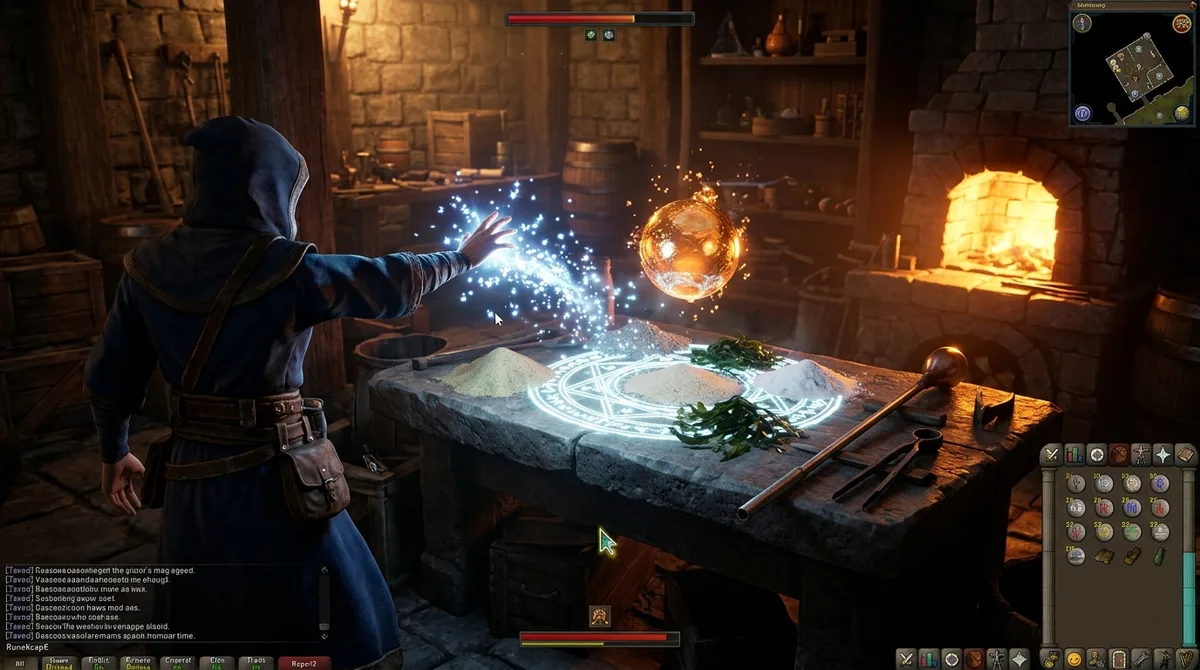
Casting Superglass Make is a members-only Crafting method that uses a Lunar spell to turn buckets of sand and giant seaweed into molten glass, so you do not need a furnace. A typical inventory holds 18 buckets of sand and 3 giant seaweed. You withdraw those, close the bank, cast the spell, then bank again a few ticks before the animation ends. Each cast also gives 78 Magic XP, so you train Magic while you craft.
With giant seaweed, the guide estimates about 108,000 to 153,000 Crafting XP per hour and 46,800 to 66,300 Magic XP per hour. Those figures assume roughly 600 casts per hour at moderate focus, rising to about 850 at peak efficiency.
The inputs add up quickly. One guide lists a 450-cast batch at 512,100 GP in input costs, and prices move often. For current figures, check the official Old School RuneScape site.
To use the method, you need level 77 Magic, the Lunar spellbook, and the completed Lunar Diplomacy quest. The guide recommends it from level 61 Crafting onward. This method suits players who want Magic XP alongside Crafting.
At a glance
- Best for: members who want Magic XP alongside Crafting
- Level Range: from level 61 Crafting, with level 77 Magic required
- Starting Cost: 512,100 GP for a 450-cast batch in one guide’s input costs
- XP Per Hour: about 108,000 to 153,000 Crafting XP and 46,800 to 66,300 Magic XP
- AFK Level: not AFK-friendly, since fast rates need frequent clicking and banking
- Membership: members only
Fixing Goblin Lamps in Dorgesh-Kaan: Active Strong XP
Fixing goblin lamps is a members-only method in Dorgesh-Kaan, and it trains Crafting and Firemaking at the same time. You use a light orb on broken lamps scattered around the city. Each repair gives 500 XP in both skills, and every 50 repairs adds a bonus of 2,500 XP in each skill. The OSRS Wiki training guide estimates about 90,000 Crafting XP per hour for learners, rising to about 130,000 for skilled players who make their own light orbs.
Your main cost is the light orbs. On the Light orb page, the Grand Exchange estimate was 106 gp per orb, so a full 28-orb inventory came to about 2,968 gp. That figure leaves out any spare orbs you keep in the bank. Orb prices move often, so check the official Old School RuneScape site for current figures before you commit.
You need membership, The Lost Tribe completed, and level 52 in both Crafting and Firemaking to start. From level 52 you can run the route if you buy finished orbs. Level 87 Crafting is the practical switch point, because that lets you make your own orbs from molten glass and cave goblin wire.
This method is not AFK. The route means constant running between lamps, repeated orb use, and searching the city for broken ones. Carry a large stack of orbs so you make fewer trips to the bank, and keep your eyes on the screen while you work.
At a glance
- Best for: members who have finished The Lost Tribe and want strong Crafting and Firemaking XP
- Level Range: 52 Crafting and Firemaking, with level 87 Crafting needed to make your own light orbs
- Starting Cost: about 2,968 gp for a 28-orb inventory at a 106 gp per-orb quote
- XP Per Hour: about 90,000 Crafting XP for learners and up to 130,000 for skilled players
- AFK Level: low, since the route needs you to watch it closely
- Membership: members only
Spinning and Weaving Yarn: Lower-Click Mid-Level Training
Hueycoatl Hide Bodies: High-Cost Hands-On Training
Hueycoatl is a group boss, so you need a team and a way to kill it before you can train this way. You craft its hide armour from the hides it drops, and the hides do not need tanning first. It is a newer profit option for players who already fight it. Each hide body uses three hides and one thread, and it awards 285 XP at level 78 Crafting.
Speed is the main draw. One Crafting guide estimates about 500,000 XP per hour for these bodies and recommends switching to them at level 78 when speed matters more to you than cost. Each craft takes three game ticks, or 1.8 seconds. The training route covers level 78 to 99, and it is members-only.
The bill is the hard part. One Grand Exchange listing priced a Hueycoatl hide at 470.3k coins, so 27 hides, enough for nine bodies, come to about 12.7 million coins before you add thread. Hide prices can change substantially, so check the official Jagex page for current details before you hunt or buy.
It is not AFK. The method needs repeated crafting and banking, so you have to stay focused from one batch to the next. It suits players who already have the boss content running and the budget to match.
At a glance
- Best for: players who already take on Hueycoatl and have the budget for hides
- Level Range: 78 to 99
- Starting Cost: about 12.7 million coins for 27 hides, at one listed hide price of 470.3k coins
- XP Per Hour: about 500,000 in one guide’s estimate
- AFK Level: not AFK, since each batch needs repeated crafting and banking
- Membership: members only
Comparing Methods by Level, Cost and Attention
Use this table to compare every main method side by side. Each row shows the level range, a sample XP rate, a price snapshot for the up-front cost, how much attention the method needs, and whether you need membership.
| Method | Level range | XP rate or example | Up-front cost (snapshot) | Attention level | Membership |
|---|---|---|---|---|---|
| Gem cutting (sapphires) | 20 and up | About 139,000 XP per hour | About 4,320 GP per 27-gem batch | Close watching, frequent banking | Free-to-play |
| Stringing amulets | 1 and up | About 10,080 XP per hour | About 25,816 GP for the first batch | Low attention, bank about every 17 seconds | Free-to-play |
| Leather bodies | 14 to 18 | About 35,000 to 45,000 XP per hour | About 12,783 coins for 57 bodies | Close watching | Free-to-play |
| Cutting opals | 1 to 20 | About 20,000 XP per hour | About 30,000 to 32,500 GP for 500 opals | Close watching | Members-only |
| Battlestaves (water) | 54 to 77 | About 245,000 XP per hour | 7,907 coins per staff plus 698 per water orb | Medium, bankstanding | Members-only |
| Glassblowing (orbs) | 1 to 87 | About 91,875 XP per hour | About 2,323 coins per full inventory | Very AFK, about 50 seconds idle per inventory | Members-only |
| Goblin lamps | 52 and up | About 90,000 to 130,000 XP per hour | About 2,968 GP per 28-orb inventory | Low, you must watch the route | Members-only |
| Dragonhide bodies | 63 to 99 (fast from 77) | About 313,410 to 439,890 XP per hour | About 43,173 coins of leather per nine-body inventory | Close watching | Members-only |
| Mixed hide (legs) | 68 to 72 | Up to about 420,000 XP per hour | About 24,316 coins per legs craft | Close watching | Members-only |
| Amethyst | 83 to 99 | About 165,000 XP per hour | About 76,950 coins per 27-amethyst inventory | Semi-AFK, about 30 seconds per inventory | Members-only |
| Golem Crafting | 60 to 99 | About 100,000 to 185,000 XP per hour | Mainly furs, price varies | Close watching, movement needed | Members-only |
| Superglass Make | 61 and up | About 108,000 to 153,000 Crafting XP per hour | 512,100 GP for a 450-cast batch | Close watching | Members-only |
| Spinning and weaving yarn | 12 to 99 | About 22,880 to 184,680 XP per hour | Fibre prices vary | Lower-click, bank-side loop | Members-only |
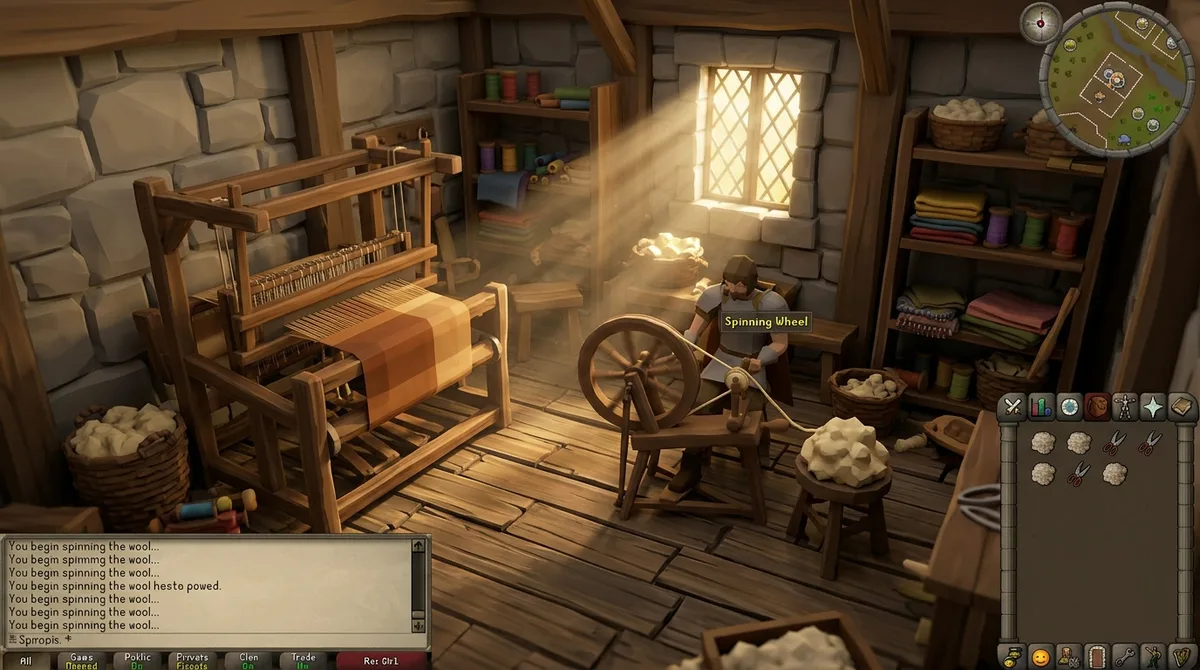
Glassblowing is the most relaxed choice, since you can step away between batches. Yarn is also lower-click, because the spinning wheel and loom on Fossil Island sit beside a bank. Stringing amulets and goblin lamps need less attention, but you still have to return to the bank or keep moving. Battlestaves and amethyst sit in the middle, while dragonhide bodies, mixed hide, Golem Crafting, superglass, and gem cutting need you to stay at your station.
Every XP figure in this table is an estimate built on assumed crafting and banking rates, so your own hourly total will likely be lower. The cost figures are price snapshots, and the Grand Exchange can shift them within days. Use the table to shortlist methods that fit your level and account, then check current prices before you spend any gold.
Choosing a Crafting Route for Ironman and Free-to-Play Accounts
Free-to-play accounts have a smaller menu, but it still takes you a long way. Stringing amulets needs no quest and works from level 1, so it is the simplest place to start. Once you are past the early levels, hardleather bodies are a main free-to-play option, and you can train them from level 28 all the way to 99. Material prices can jump, so the free-to-play guide advises switching methods when the numbers change.
Ironman players face a different limit. You cannot buy supplies from other players or the Grand Exchange, so every ingredient has to come from your own gathering, killing, or skilling. That makes self-sufficient routes the right pick. Leather bodies work well if you tan your own cowhides, and drift nets are a members-only option that needs jute you gather yourself. Before you start, list every item the route uses and confirm you can collect each one, so you never run out of thread or a needle halfway through a session.
Quests also decide what you can reach. Death on the Isle unlocks the costume needle from the Costumer in Aldarin, which lets you make nine dragonhide bodies per inventory instead of eight. The Lost Tribe opens goblin lamps in Dorgesh-Kaan. Fallen From Grace unlocks Golem Crafting on Wyrmscraig, and reaching it requires 62 Sailing, 60 Crafting, 47 Runecraft, and 53 Mining. Finish the matching quest before you plan around any of these methods.
Membership is the last check. Opal cutting needs an active membership, and battlestaves, dragonhide bodies, and amethyst cutting are members-only too. If your account is free-to-play, stick to stringing amulets, leather bodies, and hardleather bodies. If you are a member, you can compare the full list, but only after you confirm which quests and items your account already has.
Planning Your Budget With Price Snapshots and a Calculator
Before you spend any gold, remember that every price in this guide is a snapshot. The 240 coin leather price in the pay-to-play guide was accurate at that moment, but the Grand Exchange can push it up or down within days. When you budget, write down the price you saw, the date you saw it, and the most you will spend on one batch.
A Crafting calculator can do the sums for you. It nets your material costs against your product sales using instant-buy and instant-sell prices, and it subtracts the 2% Grand Exchange tax from what you earn. Many calculators also use best-case training rates, so the profit and XP totals they show are the top end of what you could reach.
Best-case rates are not what most players get. Your clicks will be slower, your bank trips will take longer, and you will sometimes stop to deal with a pop-up or a misclick. Before you trust an hourly total, cut the expected XP and profit by a margin you choose yourself, and plan your gold around that lower number. If a method only pays off at the top rate, it is probably too tight for your budget.
Check the price of the item you plan to craft and every material it uses before each batch, not just once at the start. Leather bought on Monday may cost far more by Friday, and a dragonhide batch can shift by thousands of coins between visits.
Plan your bank trips so you can carry the next batch without wasting time. Before you bank, count what the next inventory needs, such as thread and a needle for leather bodies, or a pipe and molten glass for glassblowing. Withdraw everything for the next batch in one trip, and keep a spare needle or pipe in your inventory so you never walk back to the bank for a missing tool.
Picking Your Next Crafting Method Today
Start by writing down three things: your Crafting level, whether your account is a member account, and how much gold you can afford to tie up in one batch. If you are free-to-play and at least level 20, begin with sapphire cutting, since gem cutting needs no membership. Once you reach level 43, diamonds are worth testing too.
If you are a member at level 77 or higher with a healthy bank, compare dragonhide bodies with amethyst cutting. Run both through a Crafting calculator, and subtract the 2% Grand Exchange tax from every sale before you decide.
Next, check the live price of your first material and note the date you saw it. Set a loss limit for one batch, and drop any method whose profit disappears when that price rises.
Then log one full session. Count your real XP per hour and compare it with the estimate in this guide. Most players land below the best-case figure, so cut your gold plan by the gap you find before you commit more coins.