
Hunter Training Guide
To start Hunter training in Old School RuneScape, make your first stop the Varrock Museum and complete the Natural History Quiz. It grants 1,000 Hunter experience, enough to jump from level 1 to level 9 before you ever set a trap.
Once you reach level 9, the early active methods take over, starting with tracking kebbits and catching butterflies. These routes keep your levels climbing early on. Later, birdhouse runs open up, but they need the Bone Voyage quest and access to Fossil Island first. Keep reading to see how each route compares in practice, from the early levels to the high-level Herbiboar route at level 80, so you can pick what fits your level and style.
Key Takeaways
- Start your Hunter training at the Varrock Museum by completing the Natural History Quiz, which grants 1,000 Hunter experience and takes you from level 1 to level 9 before you set a single trap.
- Track Feldip weasels from levels 9 to 15 for about 13,000 Hunter experience per hour, then switch to catching ruby harvest butterflies while trapping copper longtails at level 15 to reach up to 20,000 Hunter experience per hour.
- Count how many 500-coin Falconry runs your coins can cover before you commit to Falconry in the level 43 to 49 range, since you pay that fee every time you go.
- Finish a Novice rumour at level 46 and note your new Hunter level, because you can work out your reward with (your Hunter level + 5) × 50, so every level you gain raises what your next rumour pays.
- Try Herbiboar tracking at level 80 for about 115,000 to 128,000 Hunter experience per hour, but only if you bring enough stamina potions to keep your catches near 59 to 66 per hour.
How Do You Start Training Hunter in OSRS?
The fastest first step in Old School RuneScape is the Natural History Quiz at the Varrock Museum. Once it’s done, move on to early active methods like tracking kebbits and catching butterflies.
The quiz comes first because it asks nothing of you. You don’t need traps, supplies, or a long trip across the map. Finishing it gives you 1,000 Hunter experience, which is enough to go from level 1 to level 9 before you set a single trap. That gives you a solid base for the methods that come next.
The quiz is a one-time boost, though. Once you’ve claimed that experience, every level after level 9 has to come from real training. Your early routine should look something like this:
- Walk to the Varrock Museum and complete the Natural History Quiz to reach level 9.
- Start tracking kebbits as your main early method, since it keeps your Hunter level climbing.
- Switch to catching butterflies whenever you want a change of pace from tracking.
- Keep alternating between the two until you’re ready to plan for the mid-level routes.
Active methods like these need your attention the whole time, so they work best when you can stay focused and click through each track or catch. That’s a different pace from anything you’ll do at the start of your journey.
Which Early Methods Work Best From Levels 9 to 21?
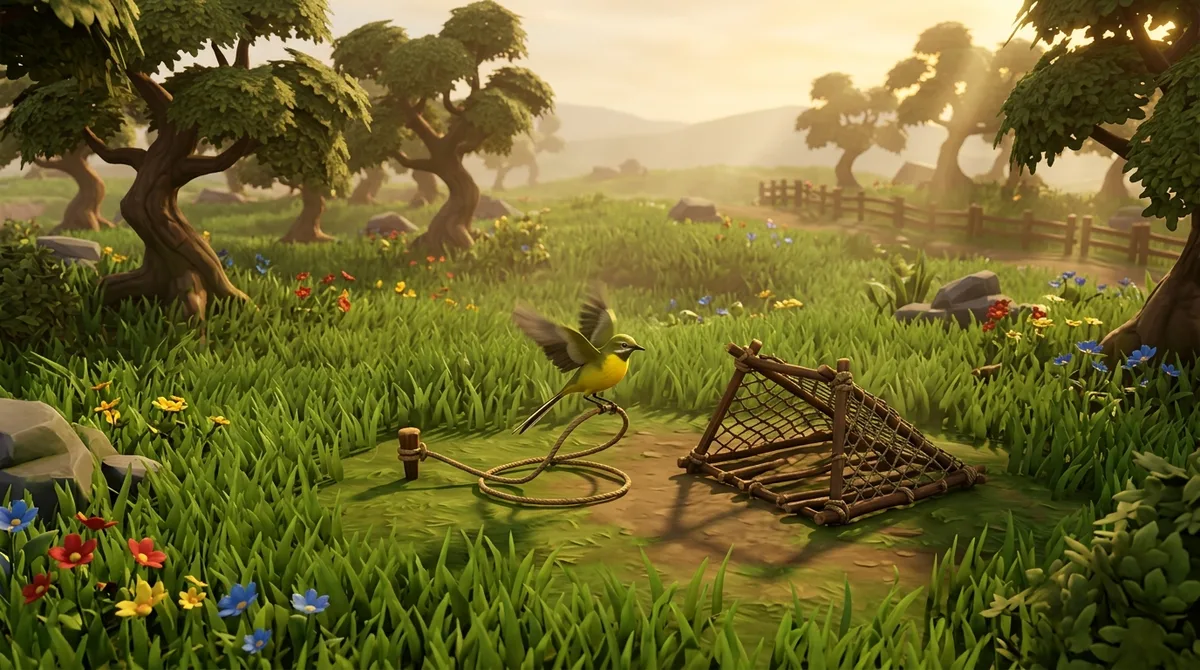
Between levels 9 and 15, tracking Feldip weasels is the best early active method, with an estimated 13,000 Hunter experience per hour. It keeps you moving from one set of tracks to the next, so it suits anyone who likes a steady, hands-on rhythm.
From level 15 to 21, the rate can go higher. Catching ruby harvest butterflies while trapping copper longtails can reach up to 20,000 Hunter experience per hour. That ceiling is about 7,000 more per hour than the weasel route, but you only get it when you handle two traps at the same time.
The extra effort is what separates the two rates. With one trap, you spend much of your time waiting for a catch. With two, you can check or reset one trap while the other is still working. If you let either trap sit idle, your hourly total falls back toward the single-trap pace. In practice, that means:
- Keep track of both traps so neither one sits empty for long.
- Reset each trap as soon as it catches something, instead of checking both at once and hoping for the best.
- Plan on more clicks per minute than you need for tracking, since every catch and reset takes your attention.
Unlike the birdhouse route, which asks for much less attention, this stretch rewards you for staying at the screen. If you enjoy a fast pace and don’t mind juggling two setups, the higher band is worth the work. If you’d rather focus on one task at a time, tracking Feldip weasels is the easier choice up to level 15.
How Does Falconry Fit Into Levels 43 to 49?
Falconry is part of the level 43 to 49 training route in the OSRS Wiki guide, and it’s the first method in this stretch that charges you for each run. Every falconry session costs 500 coins.
That’s a big change from the methods you’ve used so far. The Natural History Quiz, tracking kebbits, catching butterflies, and tracking Feldip weasels all cost nothing but your effort and a few traps. At levels 9 to 21, your only real expense was the time you spent clicking.
Falconry works differently. You pay coins up front, and in return you get a faster way to earn Hunter experience than the free options you relied on earlier. Think of the 500-coin fee as a trade-off between money and time. If you have coins to spare and want to move through the levels quicker, the fee is a fair deal. If your coin pouch is nearly empty, the free methods will still get you there, just at a slower pace.
Before you start, check how many sessions your coins can cover. Falconry is a cost you’ll repeat every time you go, so it’s worth knowing how far your money will stretch before you commit to the route.
Are Birdhouse Runs Still a Good Use of Your Time?
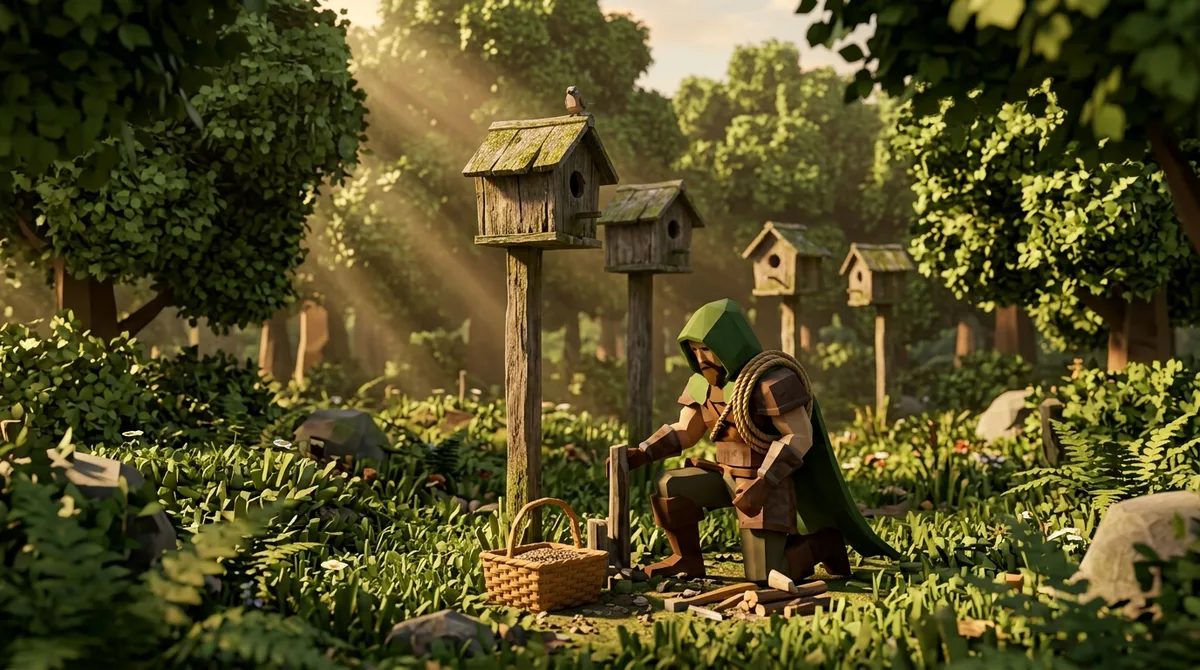
Yes, birdhouse runs are still worth your time if you want a low-attention route in the middle levels, but the August 2026 update made them a weaker deal than they used to be.
To run them at all, you first need access to Fossil Island, which means finishing the Bone Voyage quest. After that, you place your birdhouses and leave them alone. A filled birdhouse takes about 50 minutes before you can dismantle it for Hunter experience and loot, so most players set up several at once and return when they’re ready to collect.
That hands-off rhythm is the main reason people stick with this route. Unlike tracking Feldip weasels or juggling two traps, you don’t need to watch the screen the whole time. You check your houses, collect what’s ready, and reset them.
The update changed the numbers. On August 19, 2026, the OSRS Wiki’s bird house trapping page shows Hunter experience from dismantling birdhouses dropped by between 15% and 60%, depending on the tier. Nest rolls per birdhouse fell from 10 to 5, but the success rate tripled, so each house still gives you a fair shot at a nest.
Jagex said birdhouse runs account for approximately 80% of the Hunter experience players gained between levels 30 and 80. That shows how central this route is for the middle band, and why the August 2026 cut affected so many people.
So should you still use it? If you already have Fossil Island access and you’re happy with slower, steadier gains, the route still does its job. If you want the fastest XP per hour and don’t mind paying attention, the active methods may suit you better. Either way, look at how much of your time you’re willing to spend clicking before you commit to a plan.
How Do Hunters’ Rumours Work From Level 46?
Hunters’ Rumours is a task-based route that opens at level 46, and it lets you train by completing tasks instead of choosing a method yourself. Each rumour gives you a job to finish, and the reward is paid out when you’re done.
The route has four tiers, and each one unlocks at a higher Hunter level:
- Novice: available from level 46
- Adept: unlocks at level 57
- Expert: unlocks at level 72
- Master: unlocks at level 91, once you’ve also completed At First Light
The Master tier asks for more than a high level. At First Light is a quest, so you have to finish it before Master rumours appear for you. That keeps the most valuable tasks behind a bit of story and preparation, not just a number on your Hunter level.
Your rewards grow as you grow. The OSRS Wiki’s Hunters’ Rumours page gives the formula: your Hunter level after completing the rumour, plus 5, multiplied by 50 for Novice or Adept, 55 for Expert, and 60 for Master. Say you finish a Novice rumour and end up at level 47. That’s (47 + 5) × 50, which comes to 2,600.
Because the formula uses your level after the rumour, every level you gain also raises what the next rumour pays. A Master rumour at level 92 works out to (92 + 5) × 60, or 5,820, so the top tier pays noticeably more per task.
Novice rumours also hand out basic Hunters’ loot sacks. These are typically valued at about 4,792.50 coins, but treat that as a rough guide. A sack’s value depends on what’s inside it, so one sack can be worth more or less than the typical figure.
Is Herbiboar Tracking Worth It at Level 80?
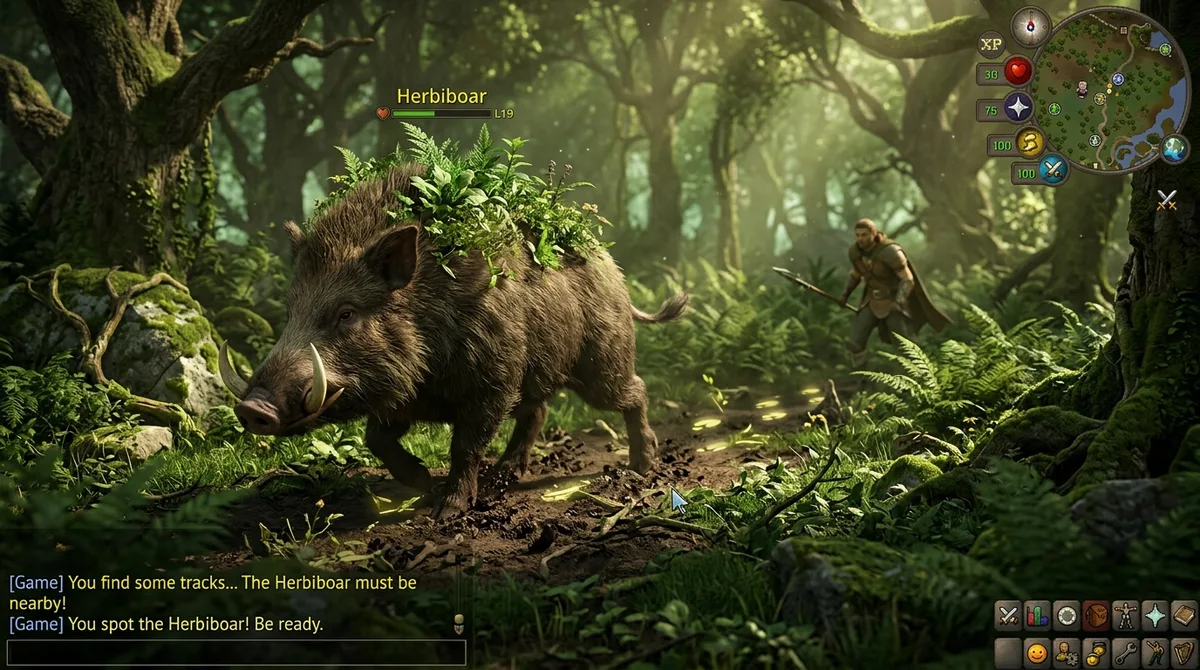
Yes, Herbiboar tracking is worth it at level 80 if you want fast Hunter experience. The OSRS Wiki’s Herbiboar page estimates about 115,000 to 128,000 Hunter experience per hour at that level.
That estimate assumes about 59 to 66 catches per hour, and it depends on stamina potions. Stamina potions restore your run energy, so you can cross the map between tracks without stopping to rest. Without them, you spend more of each hour walking, and far fewer catches fit into that time.
Compare that with the early weasel route. Tracking Feldip weasels from levels 9 to 15 gives about 13,000 Hunter experience per hour. The Herbiboar rate is roughly nine to ten times higher, which shows how far Hunter rates scale as your level climbs.
This route is built for players who have already reached level 80 and want fast XP. If you’re still working through the middle levels, the earlier methods will serve you better. Before you start, make sure you have enough stamina potions to keep your catch count near that 59 to 66 range, because the whole estimate rests on them.
Choosing Your Hunter Route Based on Your Goals
Your best route depends on how much attention you want to give the game and whether you’re willing to spend coins. Ask yourself whether you want fast, hands-on training or something you can set up and come back to.
If you like being active, stick with the Natural History Quiz at the Varrock Museum, then move through tracking and butterfly catching. Those early methods cost nothing but your focus. In the middle levels, you trade some of that activity for something else. Falconry costs 500 coins per run, and Hunters’ Rumours from level 46 swap clicking for task work.
Birdhouses suit players who want low-attention XP. Once you have Fossil Island access through Bone Voyage, you can place your houses, walk away, and return later. Expect less experience than before the August 2026 update, though. At level 80, Herbiboar tracking is the route for speed, as long as you bring enough stamina potions to keep your catch count high.
Your next step is simple. Check your current Hunter level, find the band it falls into, and start the first method listed for that band today.
Picking Your Next Hunter Step
Start by checking your current Hunter level, then follow the step that matches it.
If you’re below level 9, walk to the Varrock Museum and finish the Natural History Quiz. It takes you to level 9 without a single trap in your inventory.
If you’re between levels 9 and 15, start tracking Feldip weasels and aim for the estimated 13,000 Hunter experience per hour. When you reach level 15, buy a second trap and begin catching ruby harvest butterflies with copper longtails, so one trap is always working while you reset the other.
If you’re between levels 43 and 49 and have coins to spare, count how many 500-coin Falconry runs your bank can cover before you commit. Then check whether you’ve reached level 46. If you have, open your first Novice rumour and note your Hunter level after it, because that number decides what the rumour pays.
If you’re at level 80 with a stock of stamina potions, try Herbiboar tracking for one hour and count your catches. If you land near 59 to 66, the route is working for you. If you fall well short, look at how many potions you’re using and how much time you spend walking between tracks.
Whatever your level, pick one method and stick with it for a full session before you judge it. You’ll learn more from one hour of real clicks than from comparing numbers on paper.