

The OSRS Plank Make cost determines whether this Magic method earns profit or drains your cash. Your results depend on the logs you use, current Grand Exchange prices, rune costs, and the spell fee for each plank. Even small price changes can make oak, teak, or mahogany Plank Make a very different training choice.
You also need to weigh profit against Magic experience and the number of casts you can complete per hour. By checking your total cost per cast and comparing it with the finished plank’s value, you can choose the best logs for your bank and goals.
Key Takeaways
- Calculate Plank Make profit using live Grand Exchange prices: subtract the log cost, one nature rune, two astral runes, 15 earth runes, the applicable spell fee, and selling tax from the plank’s sale price.
- Spell fees vary significantly by log type—70 coins for regular, 175 for oak, 350 for teak, and 1,050 for mahogany—so compare total cost and margin rather than plank value alone. An earth staff can reduce purchased earth-rune costs.
- Each cast provides 90 Magic XP, and roughly 1,800 casts per hour can yield about 162,000 Magic XP hourly. Evaluate both profit per cast and profit per hour when choosing between regular, oak, teak, and mahogany planks.
- Recheck prices before buying supplies because log, rune, and plank values can quickly change profitability. Compare Plank Make with alternatives such as High Level Alchemy or Superglass Make based on profit, XP rate, required attention, and available budget.
OSRS Plank Make Cost Overview
Plank Make is a Lunar spell that lets you turn logs into planks while training Magic and potentially earning a profit. At level 86 Magic, you can process regular, oak, teak, and mahogany logs without visiting a sawmill. Your OSRS Plank Make cost includes the log price, nature, astral, and earth runes, and the spell fee for each cast. The finished plank’s Grand Exchange value must cover these expenses before the method becomes worthwhile.
Before you start, check the current price of each input and output because Grand Exchange values can change quickly. Oak logs become oak planks, which usually sell for more than regular planks but have a higher spell fee. Teak and mahogany planks have even higher fees. A useful calculation is plank sale price minus log cost, rune cost, and the Plank Make fee, with Grand Exchange tax included when you sell. This shows your actual profit per cast instead of relying on the plank’s sale price alone.
Plank Make can provide steady Magic experience because every successful cast creates one plank. Your hourly results depend on casting speed, banking time, and supply prices. Compare your expected profit per cast and per hour with other Magic training options before buying a large batch of logs. Nature rune prices matter because every cast consumes one, while astral and earth rune costs also add up across thousands of casts. Use a calculator with live prices to compare regular, oak, teak, and mahogany planks and find the best balance of profit and Magic XP.
Plank Make Fees Runes And Logs
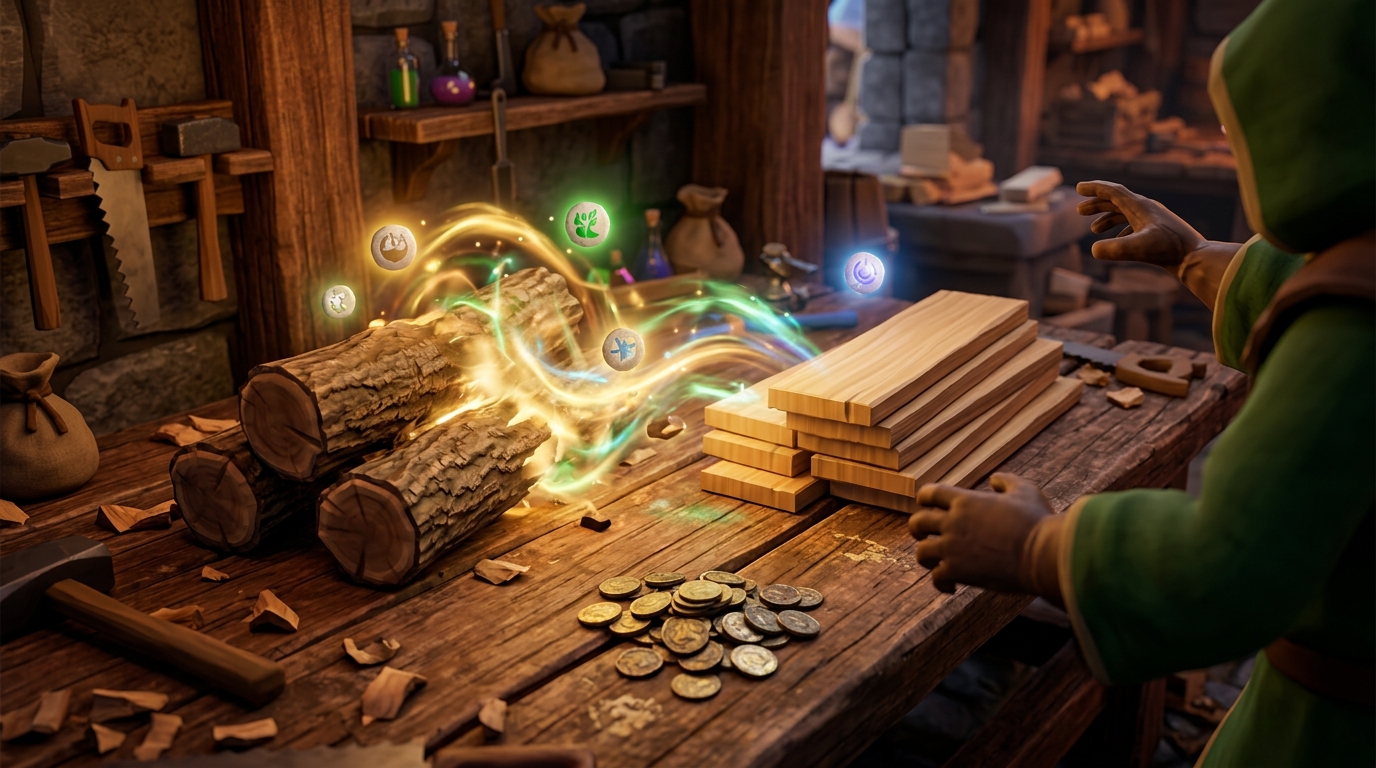
Your OSRS Plank Make cost includes the log, the runes, and the spell fee required for every cast. Each cast uses one nature rune, two astral runes, and 15 earth runes. An earth staff can supply the earth runes and reduce your cash expense. The spell fee is 70 coins for a regular log, 175 coins for an oak log, 350 coins for a teak log, and 1,050 coins for a mahogany log. Since each cast converts one log into one plank, calculate the base cost by adding the log price, rune costs, and matching fee. Check current Grand Exchange prices before you start because logs and runes can change significantly.
Regular logs have the lowest fee, but regular planks also sell for much less, so the margin is often limited. Oak logs cost more to process, but oak planks are commonly more practical because their value and Magic experience rate make them a popular training choice. Teak and mahogany logs require more upfront spending. Mahogany logs cost 1,050 coins per cast before supply costs, but mahogany planks can offer better profit when their prices are strong. Your actual result depends on the difference between the log price and the plank sale price, not the fee alone. Use a calculator to compare all four options with the same live rune and Grand Exchange prices.
For example, your profit per cast is the plank’s sale price minus the log cost, one nature rune, two astral runes, 15 earth runes, and the Plank Make fee. If you use an earth staff, remove the purchased earth rune cost from the calculation, but remember that the staff still has an item cost or opportunity cost. A method with higher profit per cast may not be best if its logs are expensive or difficult to buy in bulk. Comparing the full OSRS Plank Make cost with your expected casts per hour helps you decide whether regular, oak, teak, or mahogany planks fit your Magic training and money-making goals. Recheck the calculator whenever Grand Exchange prices move, especially before buying a large supply of logs or runes.
Profit Per Cast And Hour
Your profit per cast is the plank’s sale price minus the log, required runes, and Plank Make fee. For example, an oak plank calculation includes the oak log, one nature rune, two astral runes, 15 earth runes, and the 175-coin spell fee. Use the Grand Exchange price for each item, then subtract the total input cost from the plank’s current sale price after any applicable tax. Repeat this calculation for regular, oak, teak, and mahogany logs because higher plank values also come with higher spell fees and different log costs.
Plank Make gives 90 Magic experience per cast, and you can usually complete around 1,800 casts per hour with steady casting and banking. That equals about 1,800 planks and 162,000 Magic experience per hour, although your actual results depend on downtime and clicks. A current-price calculator helps you compare this training rate with the profit from each plank type before buying supplies. Remember that changing rune and log prices can quickly turn a small profit into a loss.
For a simple example, suppose an oak plank sells for 800 coins, while an oak log costs 50, one nature rune costs 200, two astral runes cost 200 total, 15 earth runes cost 75, and the spell fee is 175. Your total cost is 700 coins per cast, leaving about 100 coins of profit. At 1,800 casts per hour, that equals roughly 180,000 coins per hour before other costs or price changes. Enter the latest Grand Exchange prices into the calculator to replace these example values and get a more reliable estimate.
Plank Make Vs Training Alternatives
OSRS Plank Make can compare well with High Level Alchemy when you want steady Magic experience with little effort. High Level Alchemy requires a lower Magic level and can be profitable when you buy suitable items below their alchemy value. However, your profit depends on finding good margins and managing item supplies. Plank Make gives 90 Magic experience per cast, and you can often complete roughly 1,800 casts per hour with a smooth banking setup. Before choosing between the methods, subtract the log price, nature, astral, and earth rune costs, and the Plank Make fee from the finished plank’s value.
Superglass Make can offer stronger profit potential, especially when you use giant seaweed and buckets of sand, but it requires more attention and produces Crafting experience instead of planks. Its results can also change with glass prices, sand costs, and how efficiently you gather or buy materials. Plank Make is usually easier to run because you only need to load logs, cast the spell, and bank the planks. This makes it a useful low-effort option while you train Magic. Check current Grand Exchange prices for regular, oak, teak, and mahogany logs because the best choice can change between plank types.
Profitable skilling methods, such as making battlestaves or gathering valuable resources, may earn more total gold but often require more movement, supplies, or active decisions. Plank Make becomes more attractive when plank margins are positive and you value consistent Magic XP over maximum profit per hour. It can also suit you when you already have logs because your real cost is lower than the current Grand Exchange purchase price. Compare expected profit, Magic XP, casts per hour, and effort in the calculator to see whether Plank Make fits your goals better than High Level Alchemy, Superglass Make, or another profitable skilling method.
Choosing The Best Plank Make Method
Choosing the best OSRS Plank Make method starts with checking current Grand Exchange prices instead of relying on old profit tables. Enter the live price for regular, oak, teak, and mahogany logs, then include nature runes, astral runes, earth runes, and the spell fee in your calculation. Compare the finished plank’s value with the full cost of each cast to see which log offers the strongest profit per plank. Prices can change quickly, so check the calculation again just before buying supplies.
Profit is only part of the decision because Plank Make also gives 90 Magic experience per cast regardless of the log type. Estimate your casts per hour and multiply by 90 to see whether the method meets your Magic training target. Then compare that experience rate with the profit you expect to earn. If mahogany planks provide better returns but require more upfront spending, oak planks may suit you better if you want a lower-risk training method. Confirm both expected profit and Magic experience so your OSRS Plank Make cost fits your budget and training goals.
Calculate OSRS Plank Make Costs and Profit
Your OSRS Plank Make cost starts with the log, one nature rune, two astral runes, 15 earth runes, and the spell fee for each cast. The fee is 70 coins for a regular log, 175 coins for an oak log, 350 coins for a teak log, and 1,050 coins for a mahogany log. An earth staff can cover the earth rune requirement, but you still need a nature rune and two astral runes for every cast. Since each log becomes one plank, subtract the log price, rune costs, and fee from the plank’s current Grand Exchange value to find your profit per cast.
Whether Plank Make is worthwhile for Magic training or profit depends on live OSRS prices, your casting speed, and the plank type you choose. The spell gives 90 Magic experience per cast, so you can compare its rune and material costs with other training methods while estimating your hourly output. Recheck the calculator before buying supplies because log, rune, and plank prices can change quickly, turning a small profit into a loss.