
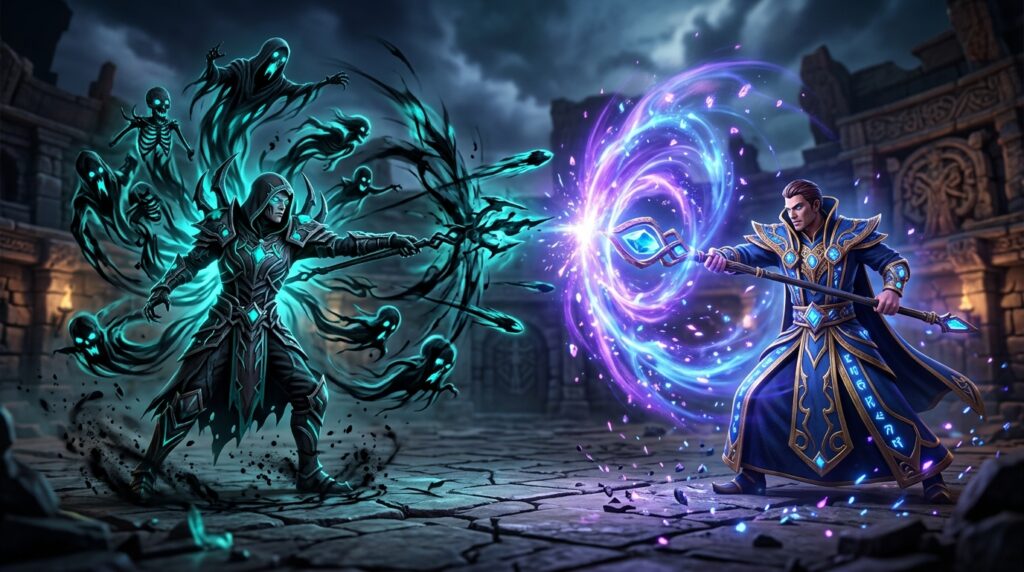
Choosing between RS3 Necromancy and Magic can affect how quickly you learn PvM, build your gear, and deal damage. Necromancy gives you conjures, built-in healing, and a clear progression path. That makes it a strong choice for solo players, Ironmen, and Revolution users. Magic takes more practice, but it offers powerful critical-hit and damage-over-time setups.
Your best style depends on more than a damage chart. Necromancy often delivers reliable results with fewer inputs, while modern Magic can reach a higher damage ceiling with strong gear and a well-timed rotation. The right choice depends on your goals, budget, favorite bosses, and how much effort you want to put into each fight.
Key Takeaways
- Necromancy is the stronger all-round choice for budget-conscious players, Ironmen, solo learners, and Revolution users because it offers self-contained gear progression, built-in healing, conjures, and reliable damage with fewer inputs.
- Magic has the higher theoretical endgame damage ceiling through critical-hit and burn-focused setups, but reaching that potential requires expensive gear, precise timing, and strong manual rotations.
- Choose based on practical performance rather than damage charts: Necromancy often delivers better consistency and survivability, while Magic excels when your gear, rotation, and boss encounter support sustained high damage.
- Existing Magic players should avoid selling their gear immediately; test both styles at regular bosses and compare kill times, survival, supply use, and effort before committing to a switch.
RS3 Necromancy Vs Magic
RS3 Necromancy vs Magic is now a closer decision than it was before the March 2026 Combat Style Modernisation update. The update gave Magic a unified basic attack, fixed ability timings, and a clearer progression path. These changes make Magic easier to learn and more consistent in real fights. Necromancy still offers one of the simplest routes into high-level PvM, with built-in healing, conjures, and reliable damage that works well with Revolution or low-input manual play. If you are returning to the game, Necromancy can be attractive because you can build a strong setup without replacing all your gear at once.
Your existing Magic investment also deserves consideration before you change styles. Magic generally has the higher theoretical endgame ceiling, especially with expensive critical-strike or damage-over-time setups and a well-practised rotation. That advantage depends on the boss, your gear, and how accurately you use your abilities, so its peak damage may not produce better results in every encounter. If you already own valuable Magic equipment, improving your rotation may provide more practical damage than selling everything to start Necromancy from scratch.
The main question is whether Necromancy’s easier progression and dependable damage outweigh Magic’s stronger potential at the top end. Necromancy is often the better choice if you want lower setup costs, steady performance, easier solo learning, or a more forgiving combat style. Magic may remain the better long-term investment if you enjoy refining rotations and can afford the upgrades needed for critical-hit or burn-focused builds. In the current RS3 meta, your boss goals, budget, and comfort with manual combat matter more than choosing one style as the universal winner.
Necromancy And Magic Gear Costs
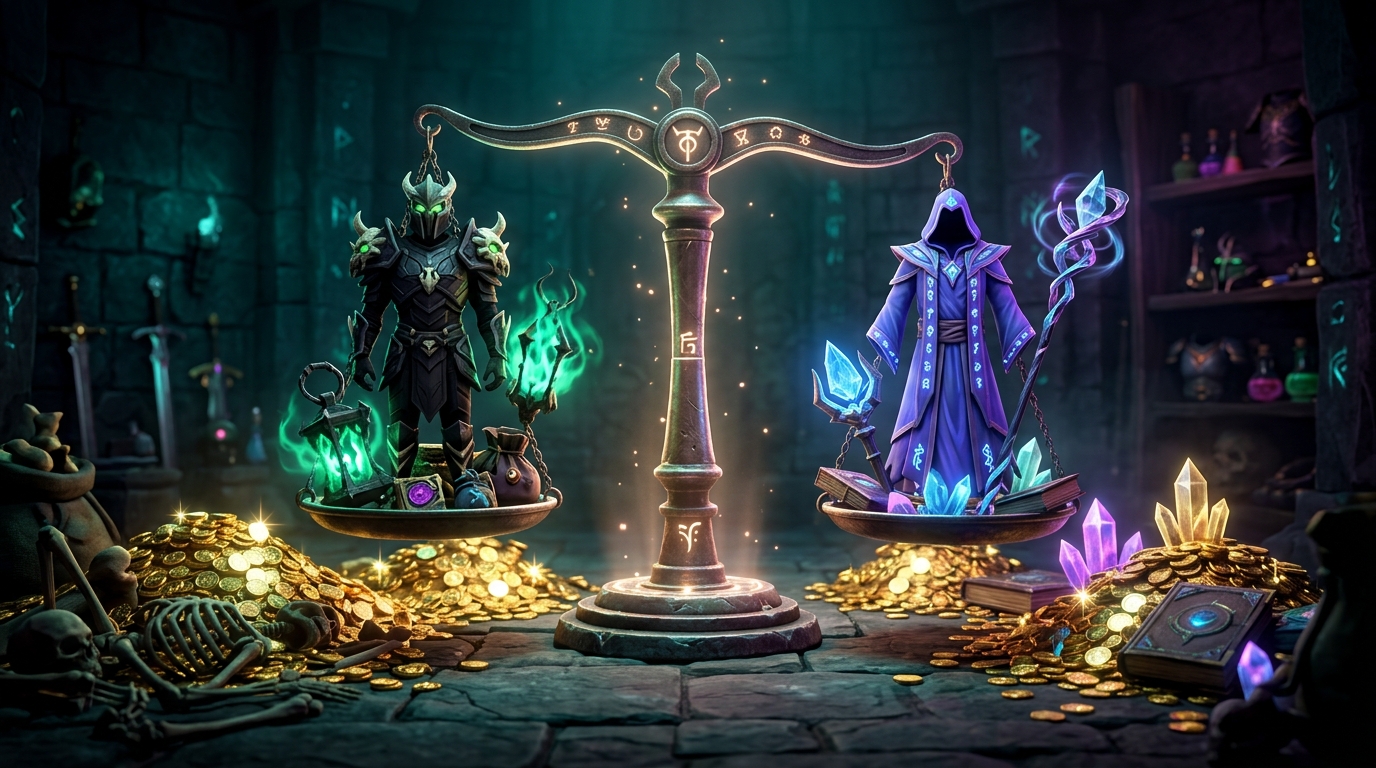
Necromancy is usually the cheaper and simpler style to build from scratch. You can craft and upgrade Deathwarden armour as you progress, while the Death Guard and skull lantern follow a clear upgrade path linked to Necromancy training and quests. This gives you useful equipment without requiring several rare drops or a full set of expensive upgrades at once. For a new account or an Ironman, this self-contained path can save time and reduce your reliance on the Grand Exchange.
Magic gives you more choices, but those choices can make a strong setup much more expensive. Depending on your goals, you may need a high-level wand and orb, a powerful staff such as the Fractured Staff of Armadyl, and costly armour upgrades such as elite tectonic. Endgame critical-hit and burn-focused setups may also require extra weapons, switches, and abilities, so replacing one item may not complete the build. If you already own valuable Magic equipment, changing styles is not automatically worthwhile. Starting Necromancy, however, can help you avoid a large initial investment.
Necromancy is especially appealing if you want reliable damage without rebuilding your entire bank tab. Its conjures, built-in healing, and straightforward rotations can give you strong practical results while you learn boss mechanics or play with fewer inputs. Magic generally has the higher theoretical damage ceiling with expensive critical-hit gear and a well-practised rotation, but reaching that ceiling takes more money, upgrades, and effort. For returning players, new accounts, and Ironmen, Necromancy can offer better value even when Magic remains the long-term choice for maximum damage.
Damage Ceilings And Practical DPS
Magic generally has the higher theoretical damage ceiling in RS3, especially when you combine strong critical-hit or burn-focused gear with a precise manual rotation. That peak depends on expensive equipment, accurate ability timing, and a boss that lets you maintain your setup without interruption. Necromancy usually produces more predictable damage through its conjures, reliable ability flow, and steady attacks that continue while you move. Its built-in healing also reduces downtime, helping you stay aggressive during mechanics instead of stopping to recover health.
Your practical DPS can therefore favor Necromancy even when Magic wins on a perfect damage chart. Conjures keep contributing during movement-heavy encounters, while Necromancy’s straightforward abilities work well with Revolution or a low-input manual rotation. Gear quality matters too. A well-upgraded Necromancy setup can outperform a partially upgraded Magic setup when you are returning to the game or learning bosses such as Araxxor and the Arch-Glacor. If you already own expensive Magic gear and can execute its full rotation, switching styles may not be worthwhile. Necromancy is often the better investment for consistent solo kills, easier learning, and reliable damage during real boss mechanics.
Boss Fit And Combat Execution
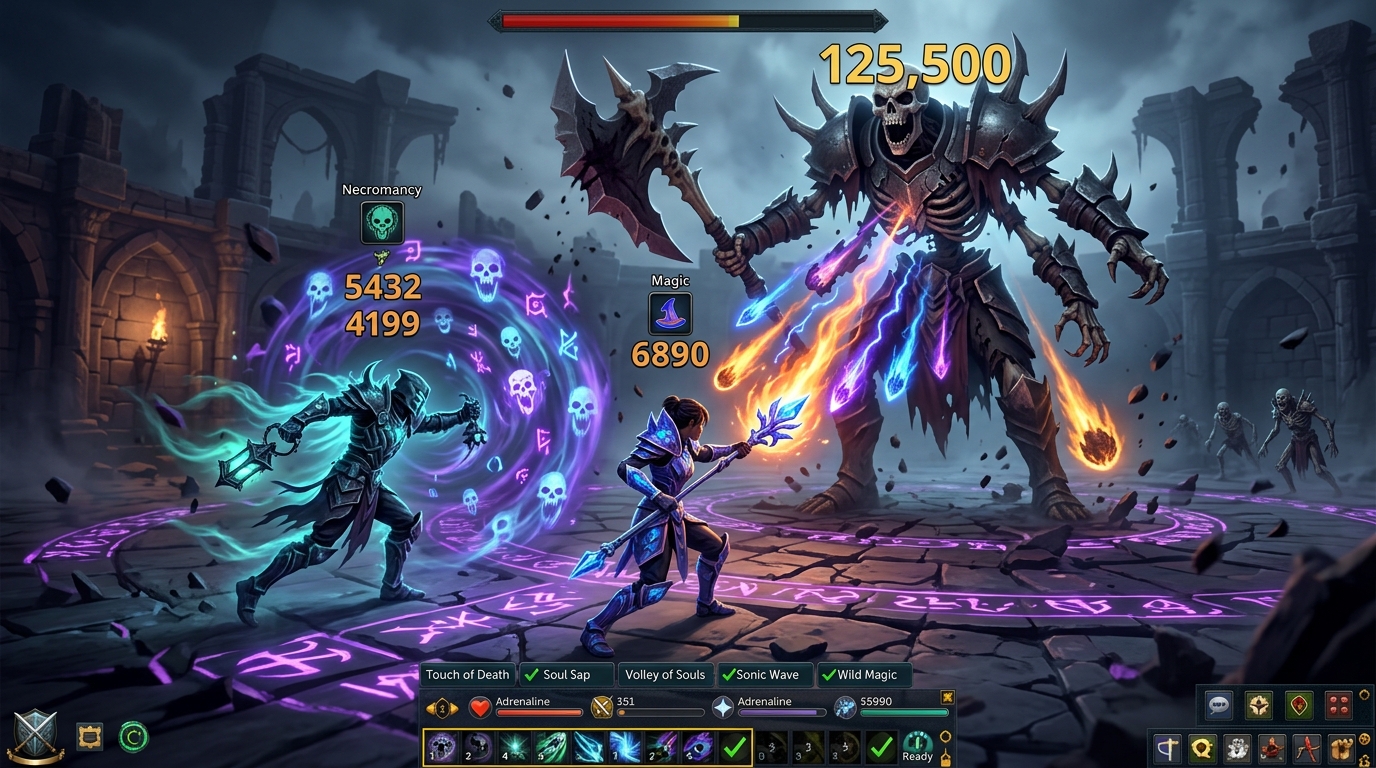
Necromancy is often the safer choice for movement-heavy solo PvM because your skeleton, ghost, and zombie keep contributing while you handle mechanics. The skeleton adds steady damage, the ghost supports recovery through healing, and the zombie adds pressure without requiring a complex rotation. This built-in healing and reliable damage can make long fights at bosses such as Arch-Glacor or Zemouregal Undercity feel more manageable, especially with Revolution or low-input manual play. You also spend less time rebuilding an expensive setup because Necromancy has a self-contained gear path and does not require the same collection of Magic upgrades.
Magic becomes more attractive when you can stay aggressive and execute a strong manual rotation around a boss’s mechanics. Its critical-strike tools reward careful timing, while damage-over-time effects can keep working during movement or downtime. This makes Magic effective in encounters where you can maintain your targets and plan your ability use. At its best, an expensive Magic setup can deliver higher theoretical endgame damage than Necromancy, but that advantage depends on your gear, rotation, and the boss. If you already own high-end Magic weapons and armour, changing styles solely for a small practical DPS gain may not justify the replacement cost.
For learners and returning players, Necromancy usually offers a smoother route back into serious PvM because its conjures, healing, and clear progression reduce the number of things you need to track. Experienced manual players may prefer Magic when a boss rewards precise critical-hit timing, sustained burns, or maximum damage during short attack windows. You can also use Necromancy as a low-risk learning style before deciding whether a Magic transition is worth funding for specific bosses. Compare your actual kill times, survival, and supply use, not just a theoretical damage figure, before changing an expensive gear setup.
Switching From Magic To Necromancy
If you already own an expensive Magic setup, you do not need to sell it immediately after the 2026 update. High-level weapons, critical-strike gear, and burn-focused upgrades can give Magic a higher endgame damage ceiling when you use the right rotation, especially at bosses where its strengths fit the fight. Keeping Magic makes sense if you enjoy manual ability use, regularly fight Magic-friendly bosses, or would lose significant value by replacing gear you already bought. Test the modernised Magic basics and timings first, since your existing setup may perform better without a major rebuild.
Necromancy is usually the more efficient choice if you are returning with limited cash or only have outdated Magic equipment. Its weapons and armour form a more self-contained progression path, while conjures, reliable healing, and clear abilities can make solo bosses easier to learn. Building a Necromancy set gradually is especially practical if you use Revolution, play an Ironman, or want strong practical damage without mastering a demanding rotation. You can start with affordable upgrades, learn encounters such as low- or mid-level God Wars Dungeon bosses, and invest more as you decide whether the style suits you.
Your preferred bosses and willingness to practise should determine whether you switch, not the idea that one style replaces the other. Choose Necromancy for a smoother learning curve and dependable results, but keep Magic available for encounters where its higher damage ceiling or familiar gear gives you an advantage. A sensible plan is to keep valuable Magic weapons and armour, fund a basic Necromancy setup with new earnings, and compare your actual kill times, supplies, and effort. This approach lets you benefit from the 2026 Magic improvements while exploring Necromancy without abandoning your existing progress.
RS3 Necromancy Vs Magic Verdict
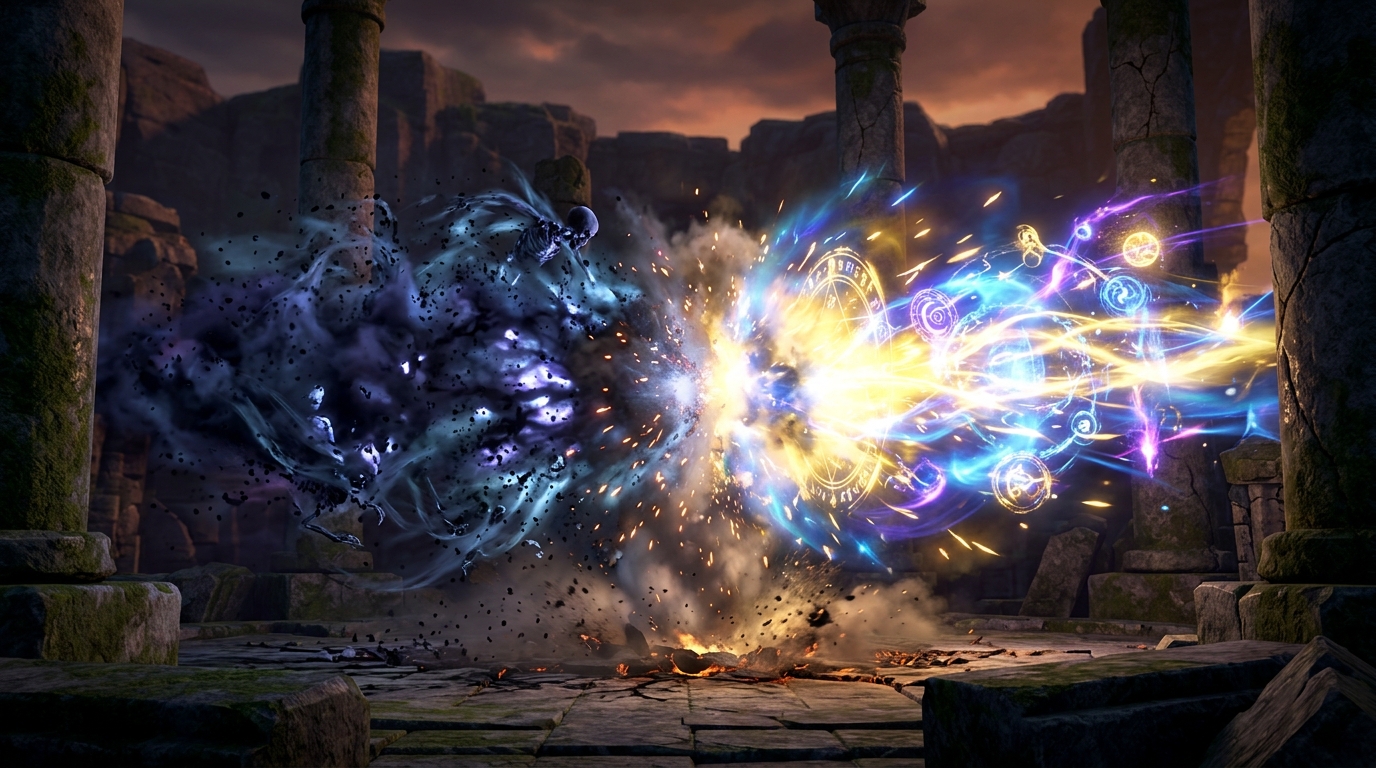
Necromancy is the better all-round choice if you value simple gearing, reliable damage, and strong survivability. Its conjures, built-in healing, and clear ability progression help you handle solo PvM without relying on a costly collection of upgrades. Magic can deal more damage at the top end, especially when you combine premium gear with critical-hit or burn-focused setups and execute a precise rotation. The result is a clear trade-off: Necromancy gives you a higher practical floor, while Magic offers a higher theoretical ceiling.
For returning players, switching from an expensive Magic setup is not automatically the right move because your existing weapons, armour, and unlocked abilities may still perform well. Necromancy can be a cheaper route into strong combat because its gear path is more self-contained and its survival tools reduce the pressure to perform perfect mechanics. You may find it easier to learn encounters such as solo God Wars Dungeon bosses or newer PvM challenges with Necromancy, particularly when using Revolution or a low-input manual rotation. Magic becomes more rewarding when you are ready to invest in upgrades and spend time refining your timing, ability order, and boss-specific strategy.
Choose Necromancy if you are an Ironman, watching your budget, or a casual PvMer who wants dependable results with less setup. Keep or build toward Magic if you already own strong Magic gear and enjoy improving rotations for demanding encounters. Ironmen will usually benefit from starting with Necromancy because of its practical progression, while budget-conscious players can reach effective damage without chasing every expensive Magic upgrade. High-level players focused on maximum DPS may want to continue investing in Magic, but most other players will likely get more consistent value from Necromancy.
Choose Between RS3 Necromancy and Magic
When comparing RS3 Necromancy vs Magic, Necromancy is usually the better choice for a simple, low-cost path into high-level PvM. Its conjures, built-in healing, and clear ability progression help you deal reliable damage with less gear and fewer complex rotations. Magic now offers a stronger, more modern combat experience, with a higher maximum damage ceiling through critical-strike and burn-focused setups. However, reaching that ceiling often requires expensive upgrades, careful timing, and stronger execution. If you already own valuable Magic equipment, test Necromancy at your regular bosses before selling your setup. The best style depends on your gear, rotation, and comfort.
For most returning players, Necromancy provides the best practical damage for your investment, while Magic remains a worthwhile long-term option if you want maximum endgame performance. You do not need to abandon Magic immediately, especially if you have already invested in powerful weapons, armour, and support items. Instead, compare your actual results at bosses such as the Arch-Glacor or Kerapac, then choose the style that feels both effective and manageable. As you build the account needed for either path, completing RuneScape 3 Archaeology mysteries can make your progression smoother. This can help you spend less time stuck on unlocks and more time improving your combat setup.