
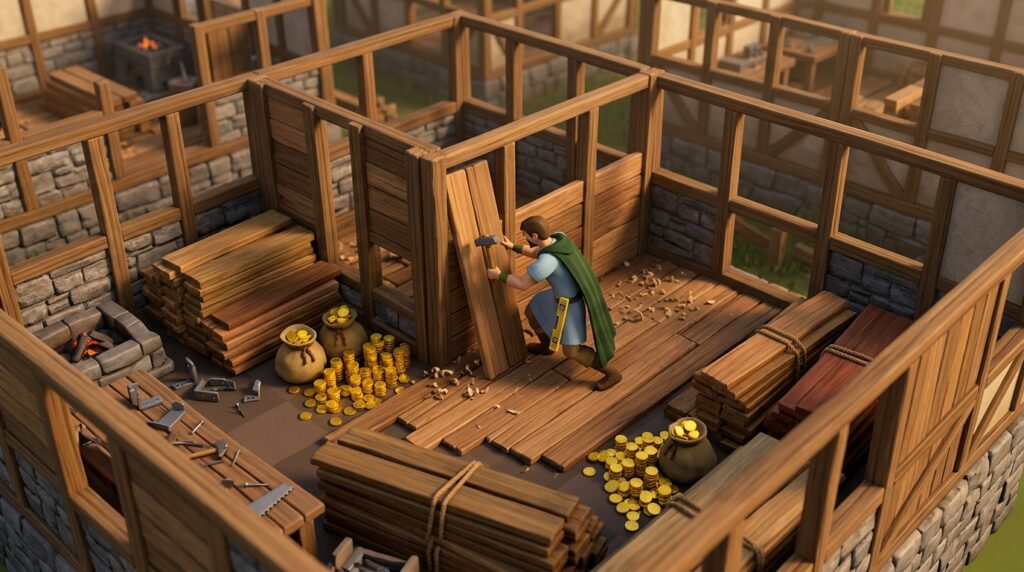
OSRS Construction training can cost 120 to 130 million gp if you use the cheapest conventional route to level 99. With oak planks at about 545 gp each, oak dungeon doors from level 74 offer a strong balance between speed and savings. Current prices can make older estimates unreliable.
Teak and mahogany planks can train Construction faster, but they cost more per experience. At these prices, oak costs roughly 9.08 gp per XP, teak 9.94 gp, and mahogany 15.59 gp. Your final bill also depends on servant fees, level requirements, and how long you use each method.
Key Takeaways
- Oak dungeon doors from level 74 are the cheapest conventional path to 99 Construction, costing roughly 120–130 million gp including servant fees. Teak offers a faster middle ground, while mahogany is fastest but can cost about 200–215 million gp.
- At current guide prices, oak, teak, and mahogany provide approximately 9.08, 9.94, and 15.59 gp per XP, respectively. Check Grand Exchange prices before buying because plank costs and total estimates can change quickly.
- Mahogany Homes is a material-efficient, budget-friendly alternative that rewards Carpenter’s outfit and plank sack progress, but its travel and contract requirements make it slower than standard player-owned-house methods.
- Budget separately for player-owned-house upgrades such as an ornate rejuvenation pool, occult altar, jewellery box, and mounted amulets, which can add roughly 15–30 million gp beyond training costs.
OSRS Construction Training Cost Overview
OSRS Construction is one of the biggest RuneScape gold investments, especially if you plan to reach level 99 and build a useful player-owned house. Your final bill depends on plank prices, training speed, servant fees, and the experience you gain from each method. At recent guide prices, oak planks cost about 545 gp, teak planks about 895 gp, and mahogany planks about 2,183 gp, but these figures can change on the Grand Exchange. Use them as a planning range rather than a fixed price.
For a cheap conventional route, oak training remains the main option. Oak dungeon doors from level 74 often cost roughly 120 to 130 million gp to reach level 99 when you include a reasonable allowance for servant fees. Teak methods offer a better balance between speed and spending, while mahogany furniture provides faster experience at a much higher cost. Based on recent prices, oak costs about 9.08 gp per experience, teak about 9.94 gp, and mahogany about 15.59 gp. These figures help you decide whether saving gold or finishing Construction quickly matters more to you.
Your budget should include player-owned-house upgrades, not just the planks used for training. Useful additions such as a mounted amulet of glory, ornate rejuvenation pool, jewellery box, occult altar, and superior garden can cost millions of extra gold. They can also make travel, healing, spell switching, and achievement diary tasks much easier. The cheapest route may not be the best overall plan if you still need major house utilities. The sections below compare cheap, balanced, fast, and utility-focused approaches so you can choose a training plan that fits your goals.
Current Plank Prices And Cost Per XP
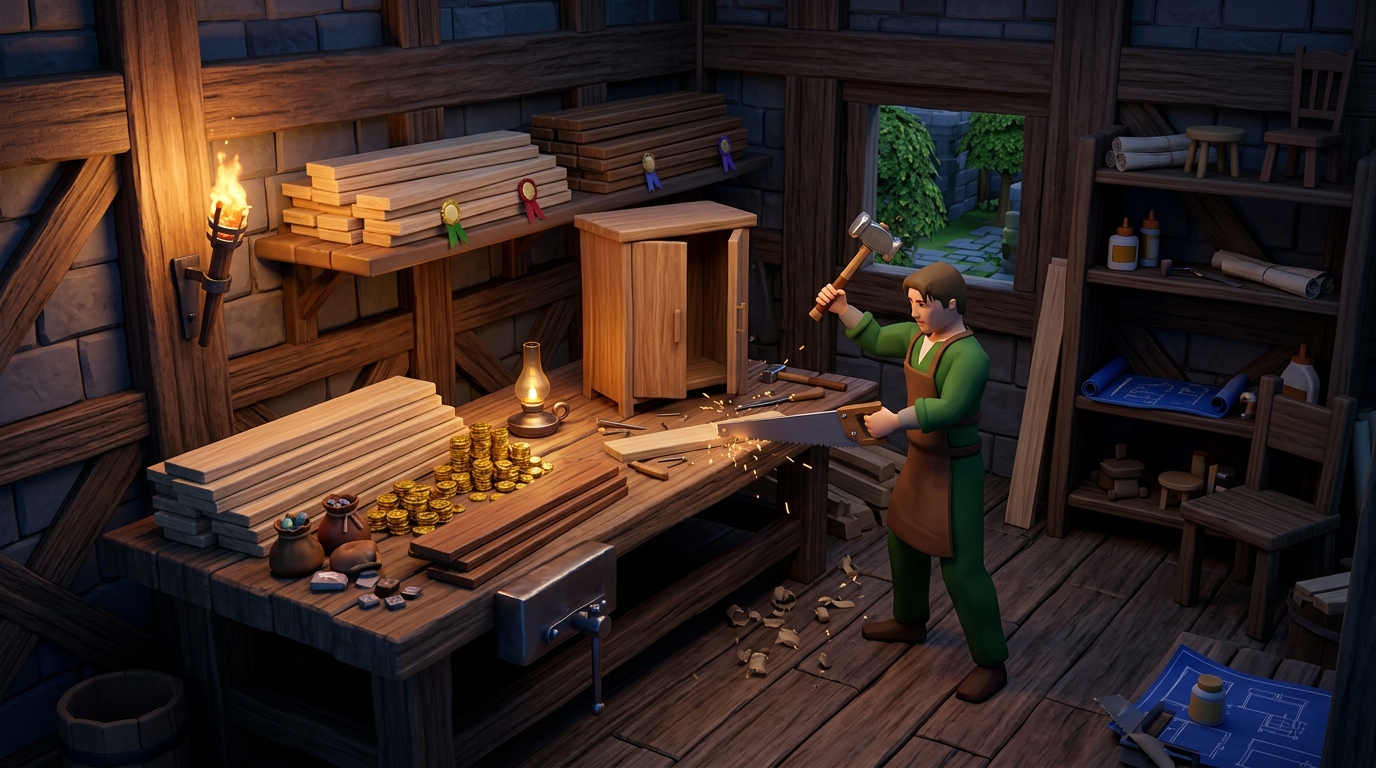
Current OSRS plank prices put oak at about 545 gp, teak at about 895 gp, and mahogany at about 2,183 gp each. Using common player-owned-house training figures of 60 XP for oak, 90 XP for teak, and 140 XP for mahogany, that works out to roughly 9.08 gp per XP, 9.94 gp per XP, and 15.59 gp per XP. Oak remains the cheapest conventional option, while teak offers a small increase in cost per XP. Mahogany can provide faster experience with some methods, but you pay a clear premium for that speed.
These figures matter when you compare a basic route with expensive POH upgrades because the plank bill can reach tens or even hundreds of millions of gp. Training with oak, such as oak dungeon doors from level 74, generally keeps your total spending lower. Teak and mahogany can save time, but they require a larger upfront investment. You should also budget for servants, saws, and other small expenses instead of treating the plank price as your entire Construction training cost. Check the Grand Exchange before buying, since even a small price change matters when you need thousands of planks.
Older Construction guides may show much lower totals because they used different Grand Exchange prices. Oak prices have recently risen by about 35% over a month, while teak and mahogany have each increased by roughly 17%. As a result, an old gp-per-XP estimate may no longer match your budget. Supply, player demand, and training popularity can all affect plank prices. Use these numbers as a current estimate, then recalculate your expected cost before starting a long training session.
Oak Teak And Mahogany Training Routes
Oak dungeon doors become a strong budget choice at level 74 Construction and can carry you through to level 99. You will use oak planks in your player-owned house, usually with a servant to keep the materials moving. This makes the route simple and reliable. At current guide prices, plan on roughly 120 to 130 million gp for the full oak route, including a reasonable allowance for servant fees and small supply costs. It is usually the cheapest conventional path, so it works well if you are also saving for house upgrades such as a superior garden or ornate rejuvenation pool. The tradeoff is that oak doors are slower than more expensive methods.
A direct teak route using mounted mythical capes offers a good balance between speed and spending. You use teak planks to build and remove the mounted cape in your quest hall, while the cape adds a smaller expense alongside the planks. Once you meet the required Construction level and account requirements, this method can take you to level 99 for about 95 to 105 million gp at the stated prices. That total makes teak attractive when you want faster training without paying for the most expensive mahogany method. Include the cost of mythical capes and servant fees when comparing your final budget.
Mahogany tables and higher-level mahogany benches provide a fast route, but they require a much larger bankroll. These builds give strong experience per action and can reduce the time you spend training, which makes them useful when speed matters more than profit. For level 99, expect the fastest mahogany route to cost around 200 to 215 million gp, depending on plank prices, servant use, and the furniture you build. Mahogany prices can change quickly, so check the Grand Exchange before buying your planks. If your main goal is a useful house for diaries and travel, oak or teak usually leaves more money available for those upgrades.
Mahogany Homes And Servant Costs
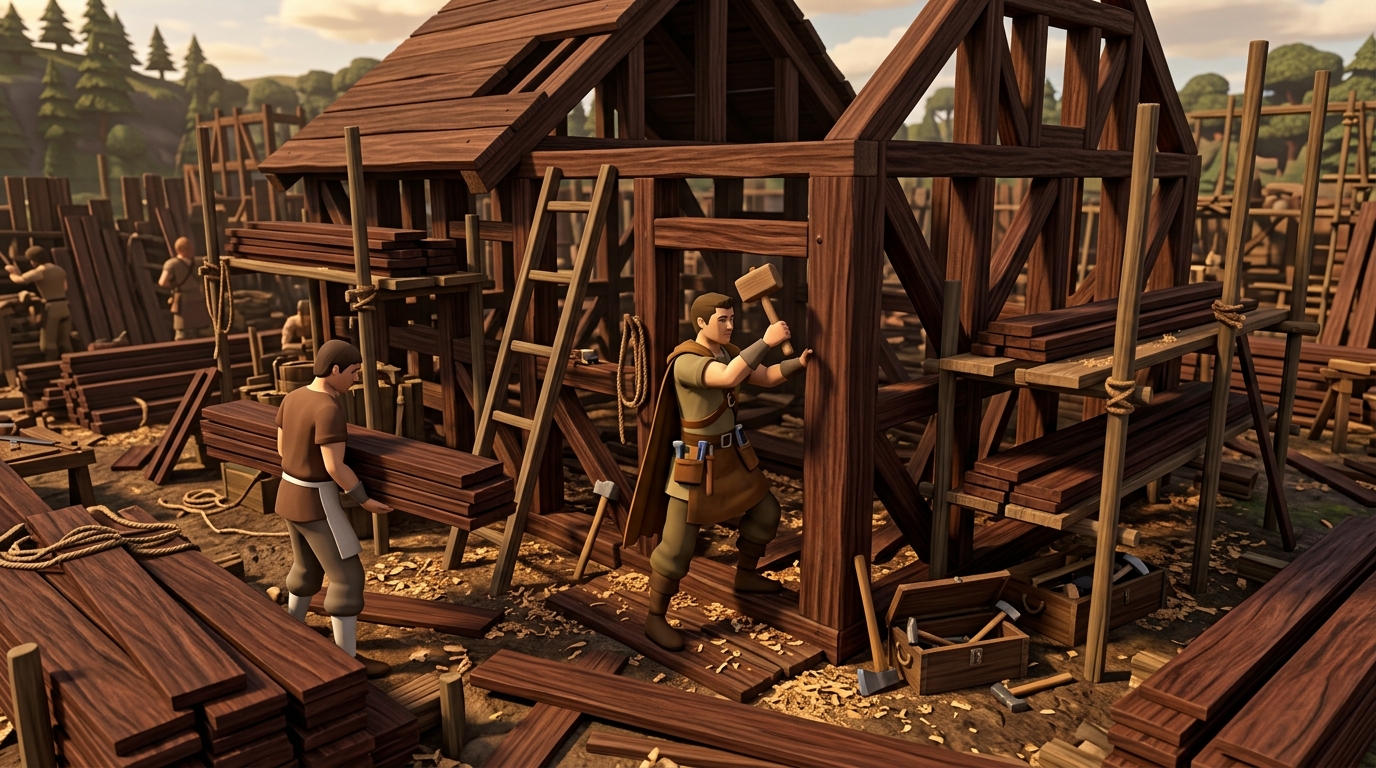
Mahogany Homes is usually the cheapest practical Construction method when you use teak planks, especially compared with using mahogany planks in a player-owned house. Teak planks cost more than oak planks, but each contract uses fewer materials and rewards you with points. You can spend those points on the Carpenter’s outfit, plank sack, and other useful items. The tradeoff is speed. Your experience per hour is lower because you must travel between NPC houses, repair furniture, and complete several tasks instead of repeating one build. Your total OSRS Construction training cost still depends on Grand Exchange prices, so check the current teak plank price before setting a final budget.
A realistic Mahogany Homes budget includes more than the planks. You may pay for Varrock, Falador, and Camelot teleport supplies, along with runes, teleport tablets, a saw, hammer, and replacement tools. A plank sack costs reward points, but it can reduce bank trips and save time and teleport supplies. The Carpenter’s outfit also improves your experience as you earn it. You normally do not need a servant for Mahogany Homes, but if you use one to support banking or switch between methods, include servant wages in your estimate. For example, the butler costs 10,000 coins per eight trips, while the demon butler costs 20,000 coins per eight trips.
Because contracts are slower, you should also allow for extra travel time and more trips than a standard oak or mahogany route. Buying teleport tablets in bulk can make your costs predictable, while a portal network, jewellery, or spellbook teleports may lower the price if you already have the required supplies. These expenses are usually small compared with the cost of teak planks, but they can add up across thousands of contracts, especially if you bank often or use a servant. For a cost-focused plan, Mahogany Homes offers a good balance of lower material use, useful reward unlocks, and manageable running costs, even though it is not the fastest route to level 99.
POH Upgrades And Total Training Budget
Your OSRS Construction training cost is separate from the money needed to make your house useful. An oak-based route to level 99 can cost around 120 to 130 million gp, including a reasonable allowance for servant fees. Teak or mahogany training may offer faster experience at a higher cost per XP. At the current estimated prices, oak planks cost about 9.08 gp per XP, teak planks about 9.94 gp per XP, and mahogany planks about 15.59 gp per XP. Treat these figures as a budget range because Grand Exchange prices can change significantly.
House upgrades can add millions of gp after you finish training. A superior garden is relatively affordable, but an ornate rejuvenation pool, occult altar, mounted amulets, and a high-level jewellery box require costly materials such as marble blocks, magic stones, and gold leaves. Depending on prices when you build them, a complete utility setup can add roughly 15 to 30 million gp beyond your training supplies. The ornate rejuvenation pool and occult altar usually make up the largest share of this extra spending, while mounted amulets and the jewellery box improve travel and teleport access.
Plan your final house goals before spending your entire bank on Construction training. If you only want level 99, a budget near 120 to 130 million gp may be enough with the oak route. A fully upgraded house can push your total Construction budget toward 140 to 160 million gp or more. You can build upgrades gradually, starting with the pool and jewellery box for everyday convenience, then adding the occult altar and mounted amulets when your teleport and spellbook needs justify them. This approach helps you compare the true cost of gaining Construction experience with the extra investment required for a powerful player-owned house.
OSRS Construction Cost Conclusion
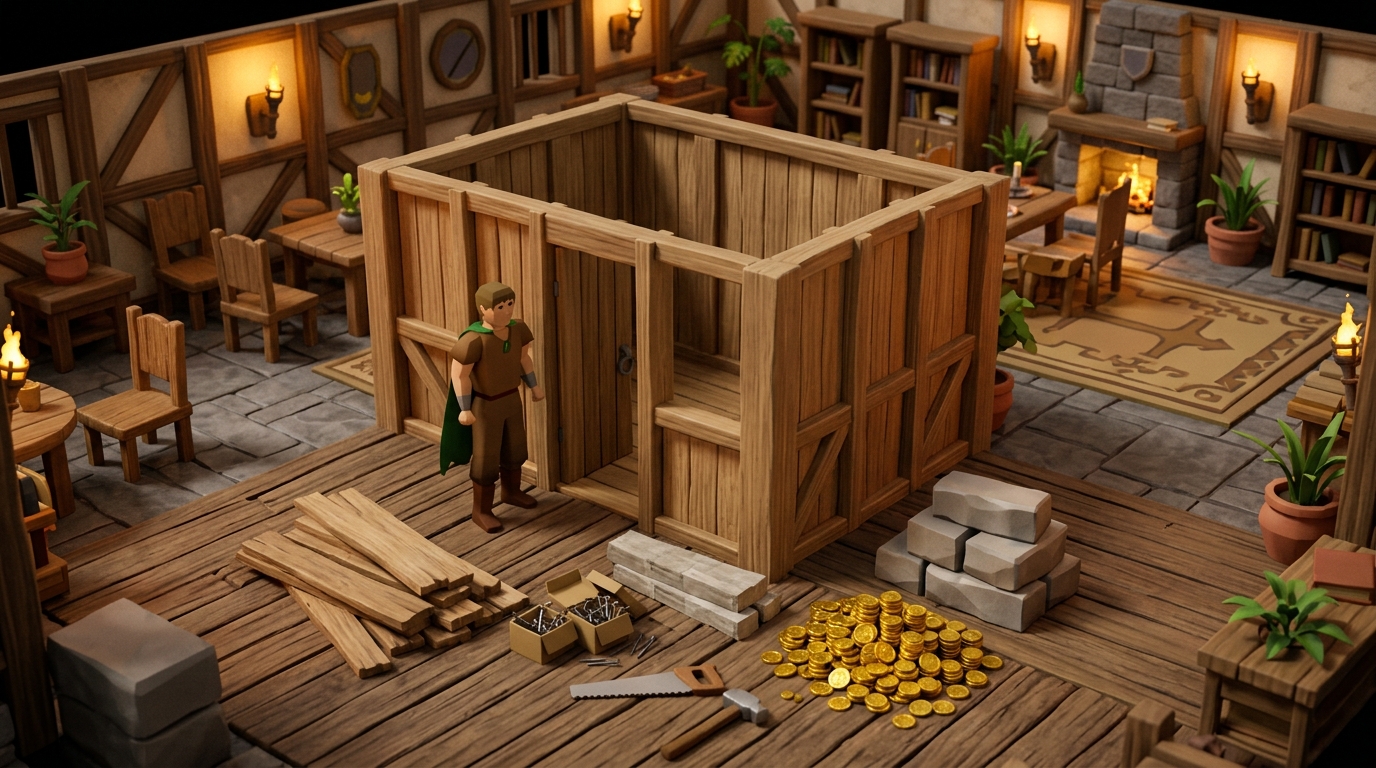
Your best OSRS Construction training route depends on whether you value low spending, efficiency, or speed. Oak training, especially oak dungeon doors from level 74, is the cheapest conventional path to level 99 and usually costs around 120 to 130 million gp with a reasonable servant allowance. Teak planks offer strong value when you want faster experience without paying mahogany prices, while mahogany planks are the fastest option and can cost substantially more. If you want lower material use and a more varied training method, Mahogany Homes is often the most budget-friendly choice overall, although it takes longer.
Before buying a large supply, check the current Grand Exchange prices for oak, teak, and mahogany planks because Construction costs can change quickly. Your final budget should also include servant payments, which can add up during long training sessions, along with house upgrades such as better rooms, a superior garden, and useful facilities. Planning for these extras helps prevent you from spending your entire bank on experience and delaying the player-owned-house upgrades that make Construction so valuable. Choose oak for the lowest conventional level 99 cost, teak for balanced value, mahogany for maximum speed, or Mahogany Homes when saving materials and gold matters most.
Choose Your OSRS Construction Training Budget
Your OSRS Construction training cost depends heavily on your chosen method and current Grand Exchange prices. Oak training is usually the cheapest conventional route, with oak dungeon doors from level 74 costing roughly 120 to 130 million gp to reach level 99 when you include a reasonable servant allowance. Teak planks offer faster training but cost more per experience, while mahogany planks are the quickest common option and can require a much larger budget. With oak planks around 545 gp, teak around 895 gp, and mahogany around 2,183 gp, older guides may give you outdated estimates.
Plan for more than training materials if you are building a useful player-owned house. Rooms, pools, portals, altars, and other upgrades can add millions of gp, but they may help with achievement diaries, bossing, spell access, and everyday travel. Check Grand Exchange prices before buying planks, keep extra cash for servants and supplies, and choose oak if your main goal is reaching level 99 while limiting spending. If you are considering shortcuts, learn more about the risks of OSRS boosting services before putting your account at risk, and make an informed decision about your Construction progress.